May 25, 2026 · Sewing Society · 3 min read · Sewing Tips & Hacks, Learn to Sew, Fabric Guides
Disclosure: As an Amazon Associate, we earn from qualifying purchases. Some links in this post may be affiliate links.
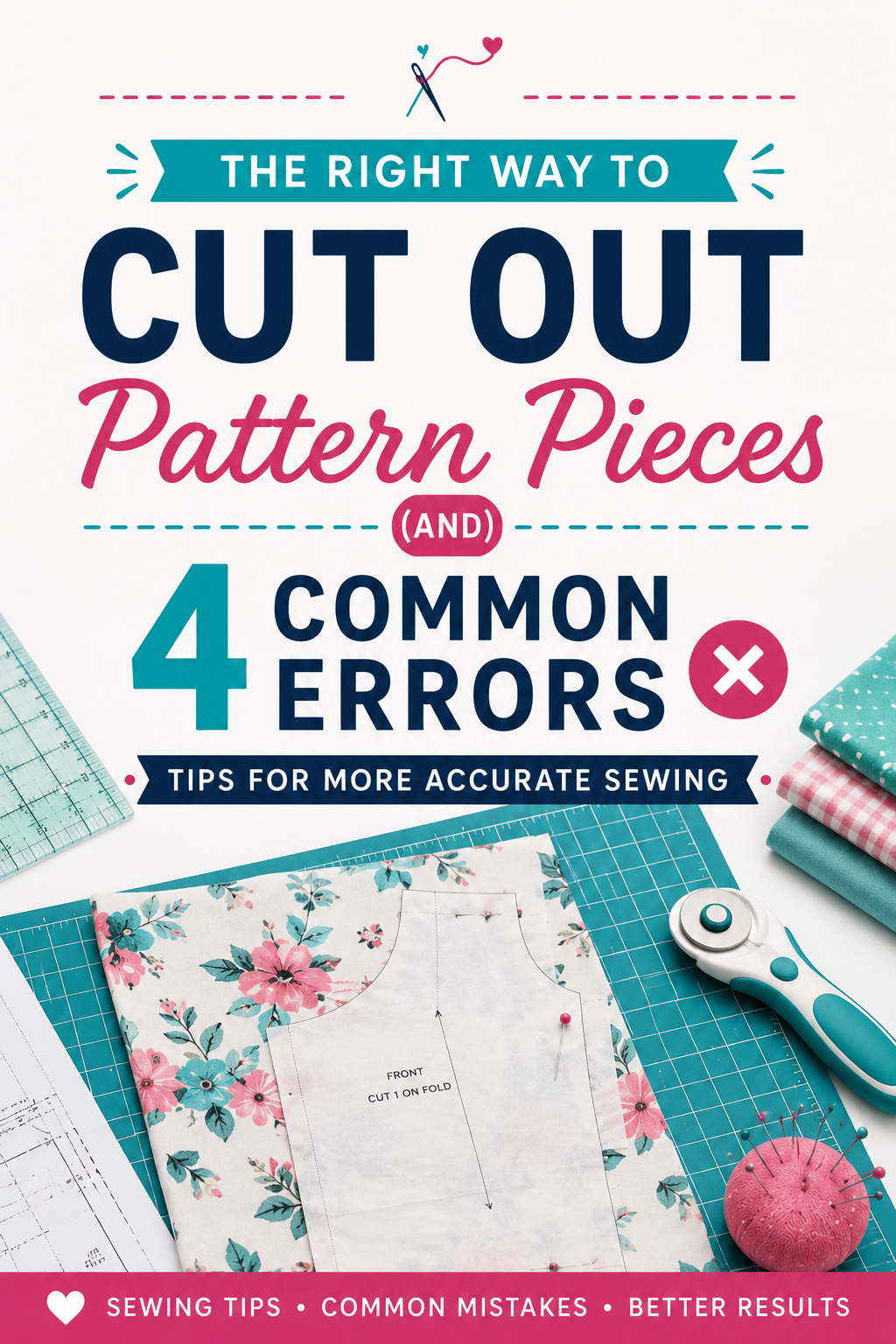
The Right Way to Cut Out Pattern Pieces (And 4 Common Errors)
How you cut your fabric matters more than most beginners realize. Sloppy cuts, missed notches, and not enough pins all lead to fitting problems and misaligned seams down the line. Here are four common cutting mistakes and exactly how to avoid them for more precise, professional-looking sewing projects.

After a trip to the fabric store, I'm always itching to start sewing. But before the fun part begins, there's the cutting phase — and how carefully you cut has a huge impact on how well the finished project comes together.
Precise cuts and accurate markings set your entire sewing project up for success. Here are four common mistakes worth avoiding every time you sit down to cut.
1. Neglecting to Mark Notches
Notches are the small triangles along the edges of pattern pieces. You'll see single, double, and sometimes triple notches depending on the pattern. They exist for an important reason: they show you exactly where to match up pieces when you sew, like shoulder seams, sleeve caps, and side seams. Skipping them makes construction harder and the finished garment less accurate.
To mark a notch, you simply cut a small triangle into your seam allowance to mirror the triangle on the pattern piece. The quickest method is to snip a small slit into the seam allowance at each notch point, though this can weaken seams slightly and isn't ideal for fabrics that fray easily. For fraying fabrics, cutting the triangle outward (away from the garment) is the safer approach.
It takes an extra moment, but it's a step worth taking on every project.
2. Letting Fabric Hang Off the Cutting Table
This one surprises a lot of sewists. When fabric drapes over the edge of your cutting surface, the weight creates tension that subtly stretches the fabric. This means the pattern pieces near the edge are being pulled more tightly than the ones near the center — and the cuts won't be as accurate as you think.
The fix is simple: fold any excess fabric in an accordion style at the end of your cutting surface rather than letting it hang. It takes up very little space and prevents the stretch. It also makes it less likely that you'll accidentally shift your fabric and lose your grainline or center fold.
If you find this is a recurring problem, a larger cutting surface can help. A folding fabric cutting table is a worthwhile investment if your current setup is too small for the projects you typically work on.
3. Making Short, Choppy Cuts
Short, stuttering cuts leave uneven edges that make lining up seams much harder when you sew. Long, smooth cuts produce cleaner edges and more accurate pattern pieces.
Use a quality pair of dressmaking shears and let the full length of the blade do the work. I'd recommend at least an 8-inch blade so you can take longer strokes. Gingher makes my favorite fabric scissors — the cuts are clean and controlled. If you prefer a rotary cutter, that's an equally great option for clean, precise edges, especially on long straight cuts.
4. Not Using Enough Pins
Pinning takes time, but it's not a step you can skip if you want accurate results. Fabric shifts as you cut, even when you think it's lying flat. Without enough pins, your pattern pieces move slightly, and those small shifts add up to imprecise cuts and notches that don't line up where they should.
Pin generously, especially around curves, corners, and near notch marks. If you genuinely dislike pinning, pattern weights paired with a rotary cutter are the only real alternative — weights hold the pattern in place without pins, and a rotary cutter glides through without the shifting that scissors can cause.
 Pin It
Taking a little extra care at the cutting stage pays off every single time you sit down to sew. Accurate cuts mean fewer fitting problems, better-aligned seams, and a finished project you're actually proud of.
Have a cutting tip of your own? Share it in the comments below!
Related reading: How to Sew Stretchy Fabrics Without Losing Your Mind
AI Sewing Coach
Create a free account to chat with our AI Sewing Coach — trained to help with sewing techniques, troubleshooting, projects, fabric questions, and more!
Comments
Comments are screened by an AI moderator for spam and inappropriate content.
Sign in to join the conversation.
Loading comments…