June 9, 2025 · Sewing Society · 4 min read · Embroidery, Sewing Machines
Disclosure: As an Amazon Associate, we earn from qualifying purchases. Some links in this post may be affiliate links.
9 Mistakes to Avoid When Buying Your First Embroidery Machine
Buying your first embroidery machine is exciting, but it's easy to spend too much, too little, or on the wrong things entirely. Here are nine common mistakes first-time buyers make — from ignoring embroidery field size to overlooking warranty terms — and how to avoid every one of them.

Embroidery machines are genuinely amazing. They turn ordinary bags, shirts, and home décor items into something personal and polished — without the hours of hand stitching.
But they're also a significant investment, and the market is full of options at wildly different price points. I've been there, and I have a few regrets about my own first purchase. Here's what I wish I'd known before I bought.
1. Not Knowing How You Plan to Use It
This is where most people go wrong first. Embroidery machines vary enormously in features and price, and buying the wrong one for your actual needs either wastes money or leaves you frustrated with a machine that can't do what you want.
Before you start researching, make two lists: must-have features and nice-to-have features. Think about both what you need now and what you might want to do in the future. Features worth considering include:
Embroidery field size
Number of needles
Throat width
Automatic thread cutting and needle threading
USB port for design transfer
Combination sewing and embroidery capability
Screen size
Warranty and customer support
If you don't need multiple needles, don't pay for them. Multi-needle machines are for people running a home embroidery business — they cost more and take up considerably more space.
2. Paying Extra for a Brand Name Alone
You don't need to spend $5,000 to get a great embroidery machine. Most reputable brands produce reliable machines, and there's often less practical difference between them than the price gap suggests. If you're comparing brands, visit a local sewing machine dealer and test them side by side before deciding.
My first sewing and embroidery combo cost well under $1,000 and I was happy with it. Affordable machines can absolutely get the job done. The Brother SE2000 is one of my top recommendations for anyone who wants a capable machine at a reasonable price.
3. Paying Extra for Built-In Designs
Most embroidery machines come with some built-in designs. That's fine, but don't let the number of built-in designs drive your purchasing decision or your willingness to pay more. There are millions of embroidery designs available online, many of them free, and you can purchase digitizing software to create your own. Built-in designs are a nice starting point, not a reason to spend extra.
4. Choosing a Machine Without USB Design Transfer
Make sure the machine you buy can import designs via USB flash drive. You do not want a machine that requires a cable connection between your computer and the embroidery unit — it's inconvenient and limits where you can work.
Also avoid machines that use embroidery cards or floppy disks. These older formats are no longer supported by manufacturers, which means if anything goes wrong, you're out of luck for repairs or updates. This is also a reason to be cautious about buying used machines — always verify the transfer method before committing.
Higher-end machines include Wi-Fi for wireless design transfer, which is convenient but not necessary for beginners. USB is plenty.
5. Not Getting a Large Enough Embroidery Field
If there's one place to stretch your budget, this is it. The embroidery field is the maximum size design your machine can stitch in a single hooping, and once you own the machine, you can't change it.
Most entry-level machines top out at a 4"x4" field. That's workable, but limiting for larger projects. The Brother SE2000 steps up to 5"x7", and the Bernette b79 offers a 6"x10" field. Spend as much as you reasonably can on embroidery field size — you'll almost certainly wish you had more room as you get more comfortable with the machine.
6. Ignoring the Throat Width
The throat width is the space between the needle and the body of the machine. This matters especially for quilting, but it also affects how easily you can maneuver fabric and larger hoops during embroidery. If you're planning to do any quilting on your machine, check the throat width before you buy.
7. Not Paying Attention to the Screen Size
A larger, full-color touchscreen makes design setup significantly easier. You can see exactly how your design will look before you stitch, make size and placement adjustments, and navigate the machine's settings with less guessing. Better machines have larger, more responsive touchscreens — it's worth prioritizing if you have a choice.
8. Not Checking What Accessories Are Included
Some embroidery machines are priced attractively because they come with almost nothing. You'll need embroidery thread, stabilizer, multiple hoop sizes, and extra needles at a minimum. If none of that comes in the box, that affordable price tag starts looking less impressive.
Before buying, check what hoops, presser feet, needles, and bobbins are included. You'll eventually need to buy more of everything, but starting with a reasonable supply saves money upfront and lets you get stitching immediately.
9. Skipping the Warranty and Customer Support Research
Embroidery machines are complex, and things can go wrong. Before you buy, ask:
What warranty is included, and what does it cover?
Is owner training or setup support available?
Is there 24-hour customer support?
Where do you take the machine for repairs?
How often does the machine need to be serviced?
Shipping a machine to a repair center is time-consuming and risky. Knowing the answers to these questions before you buy prevents a lot of frustration down the road.
 Pin It
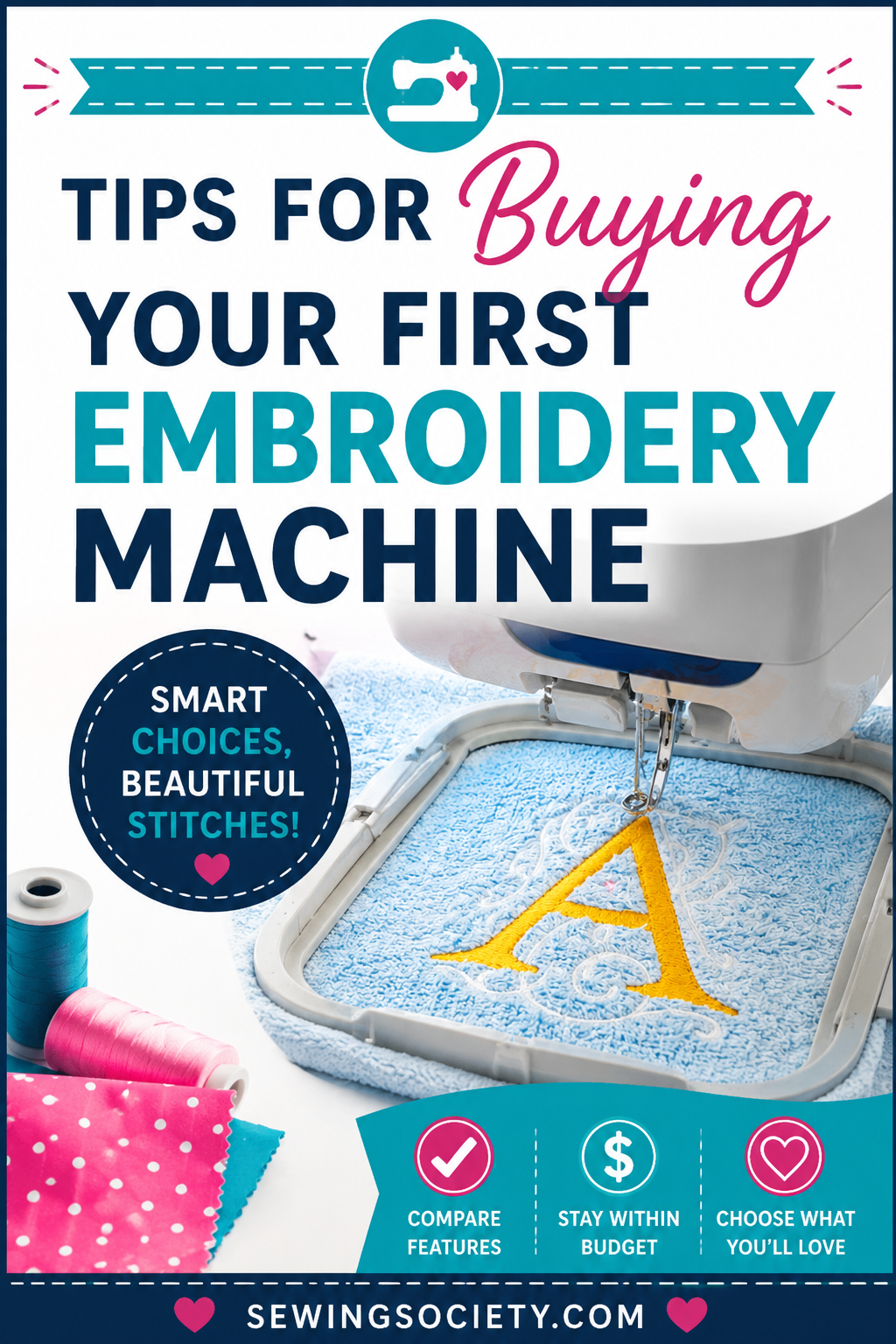
Owning an embroidery machine opens up a whole new level of creative possibility. Take your time choosing the right one, do your research, and you'll love it. The Brother SE2000 is where I'd point most beginners — solid embroidery field, great price point, and a brand with reliable support.
Have questions about buying your first embroidery machine? Drop them in the comments!
Related reading: How to Embroider on Towels: 8 Tips for Success
AI Sewing Coach
Create a free account to chat with our AI Sewing Coach — trained to help with sewing techniques, troubleshooting, projects, fabric questions, and more!
Comments
Comments are screened by an AI moderator for spam and inappropriate content.
Sign in to join the conversation.
Loading comments…