September 17, 2025 · Sewing Society · 5 min read · Sewing Tools & Reviews
Disclosure: As an Amazon Associate, we earn from qualifying purchases. Some links in this post may be affiliate links.
Everything You Need to Know About Sewing Machine Presser Feet
Specialty presser feet can transform what your sewing machine is capable of, but knowing which ones will actually fit your machine is the first step. This complete guide covers shank height, snap-on vs. screw-on systems, adapters for Bernina, Pfaff, and Husqvarna machines, and the best presser foot set to build your collection.

If you've only ever used the presser foot that came with your sewing machine, you're missing out on a whole world of sewing possibilities. Specialty presser feet can make so many techniques faster, easier, and more precise. But knowing where to start (and making sure you buy the right ones for your machine) can feel overwhelming.
That's exactly what this post is here to help with. By the end, you'll know how to identify your machine's shank type, which adapter you need (if any), and which presser feet are worth adding to your collection.
What Is a Presser Foot?
The presser foot is the small attachment beneath the needle on your sewing machine. Its most basic job is to flatten and smooth fabric as it feeds through the machine, pressing it down against the feed dogs so it moves evenly under the needle.
That basic foot handles most everyday sewing just fine. But specialty presser feet take things further. Each one is designed to make a specific technique easier, faster, or more precise. Some of the most useful presser feet include the zipper foot, invisible zipper foot, gathering foot, buttonhole foot, rolled hem foot, and blind stitch foot. However, the options go on and on.
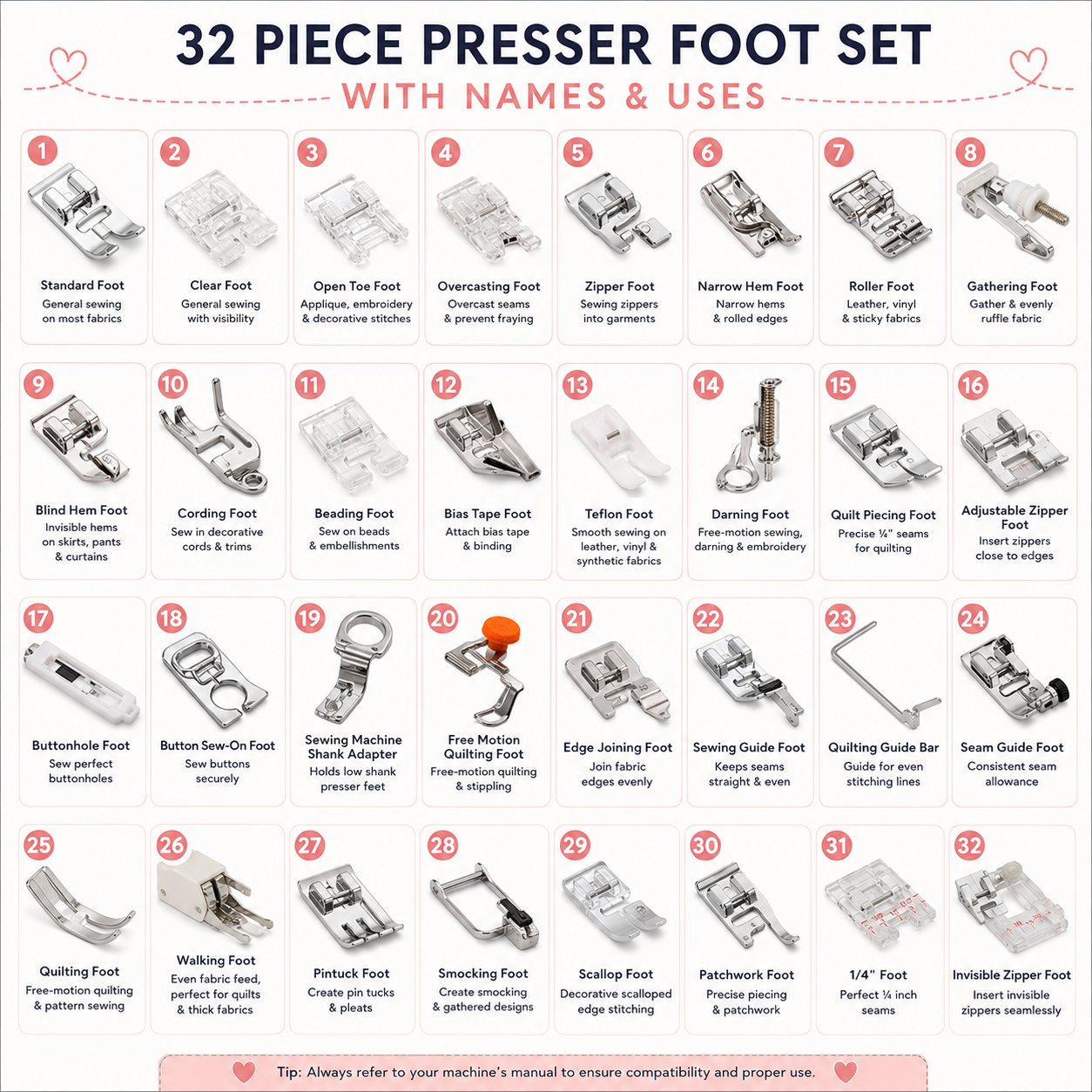
Before you start adding feet to your cart, though, there's one important thing to sort out: shank height.
Low Shank vs. High Shank Sewing Machines
The shank is the metal bar that connects the presser foot to the body of your sewing machine. Its height — the distance between the shank and the throat plate — determines which presser feet will fit your machine.
Low shank machines have a shank that sits close to the throat plate. The vast majority of home sewing machines are low shank. If you have a standard consumer-grade machine, there's a good chance this is you.
High shank machines have more space between the shank and the throat plate, which makes them better suited for sewing thick or bulky fabrics. High shank machines are more common in higher-end and industrial models, though a few budget machines have them too.
How to Measure Your Shank
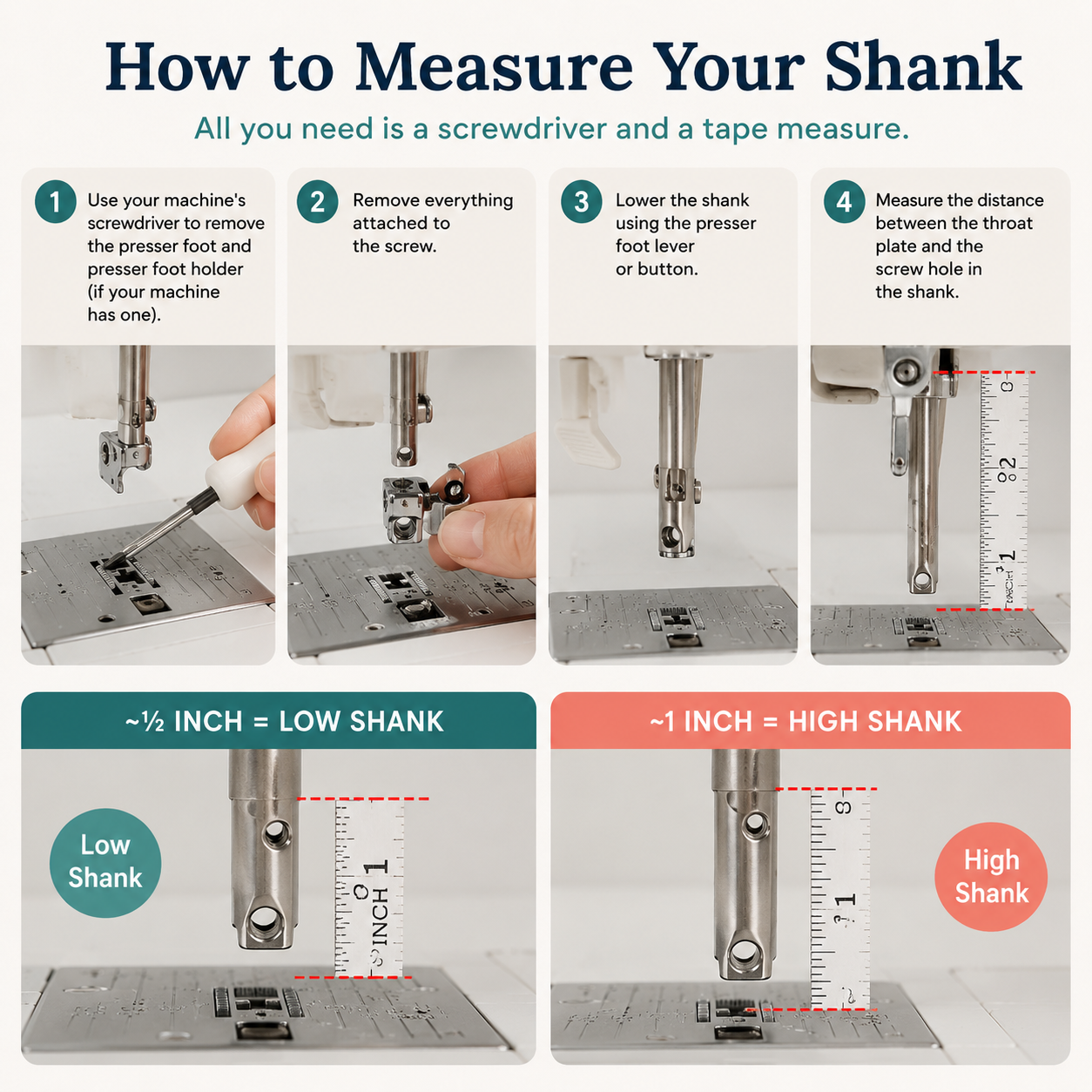
All you need is a screwdriver and a tape measure:
Use your machine's screwdriver to remove the presser foot and presser foot holder (if your machine has one). Remove everything attached to the screw.
Lower the shank using the presser foot lever or button.
Measure the distance between the throat plate and the screw hole in the shank.
~½ inch = low shank
~1 inch = high shank
Special Cases: Bernina, Pfaff, Husqvarna, and Slant Shank Machines
Most machines fall neatly into the low or high shank categories, but a few brands do their own thing.
Bernina machines use a proprietary clip-on system and aren't compatible with universal presser feet out of the box. You'll need a Bernina adapter (plus a low shank snap-on adapter) to use universal feet. Note that this applies only to Bernina-branded machines — Bernette machines (Bernina's more affordable line) follow the standard low shank system or their own style.
Pfaff and Husqvarna make both low and high shank machines, but the bar on most universal snap-on feet is too narrow to fit their presser foot holders. If you own one of these machines, you'll likely need an adapter to use universal feet.
Slant shank machines are a category unto themselves, but unless you're sewing on a vintage Singer that's 35+ years old, you almost certainly don't have one. This shank style was phased out long ago.
Snap-On vs. Screw-On Presser Feet
Once you know your shank height, the next thing to understand is how presser feet attach to your machine.
Snap-on feet have a small bar across the top that clips onto a presser foot holder. They're fast and easy to swap out — no tools required. This is the most common system on modern home sewing machines, and snap-on feet are the most widely available type.
Screw-on feet attach directly to the shank with a screw. They take a little more time to change, and you'll need to make sure you buy feet sized specifically for your shank height (low or high), since the two sizes differ. If your machine only has a screw-on system, you'll need an adapter to use snap-on feet. However, if you have a snap-on machine, you can use screw-on feet by simply removing the presser foot holder first.
Do You Need a Presser Foot Adapter?
If you have a standard low shank machine with a snap-on system already in place — great news! You can use universal snap-on presser feet without any adapter at all.
If your machine falls into one of the categories below, you'll need an adapter:
Low Shank Snap-On Adapter — needed if you have:
A low shank Pfaff or Husqvarna machine
A Bernina machine (used alongside a Bernina adapter)
A low shank machine with no snap-on system
High Shank Snap-On Adapter — needed if you have:
A high shank Pfaff or Husqvarna machine
A high shank machine with no snap-on system
Bernina Adapter — needed if you have:
Any Bernina-branded machine (not Bernette), used in combination with a low shank snap-on adapter
For screw-on feet, there are no universal adapters. You simply need to match the foot to your shank height.
The Best Presser Foot Set to Get Started
Once you've sorted out compatibility, it's time for the fun part.
I highly recommend the 32-Piece Ultimate Presser Foot Set from Madam Sew. It includes 32 specialty feet, a low shank snap-on adapter, and even an app that explains what each foot does — which is incredibly helpful when you're just getting started. You can find other presser foot sets, but Madam Sew’s app makes it the better option.
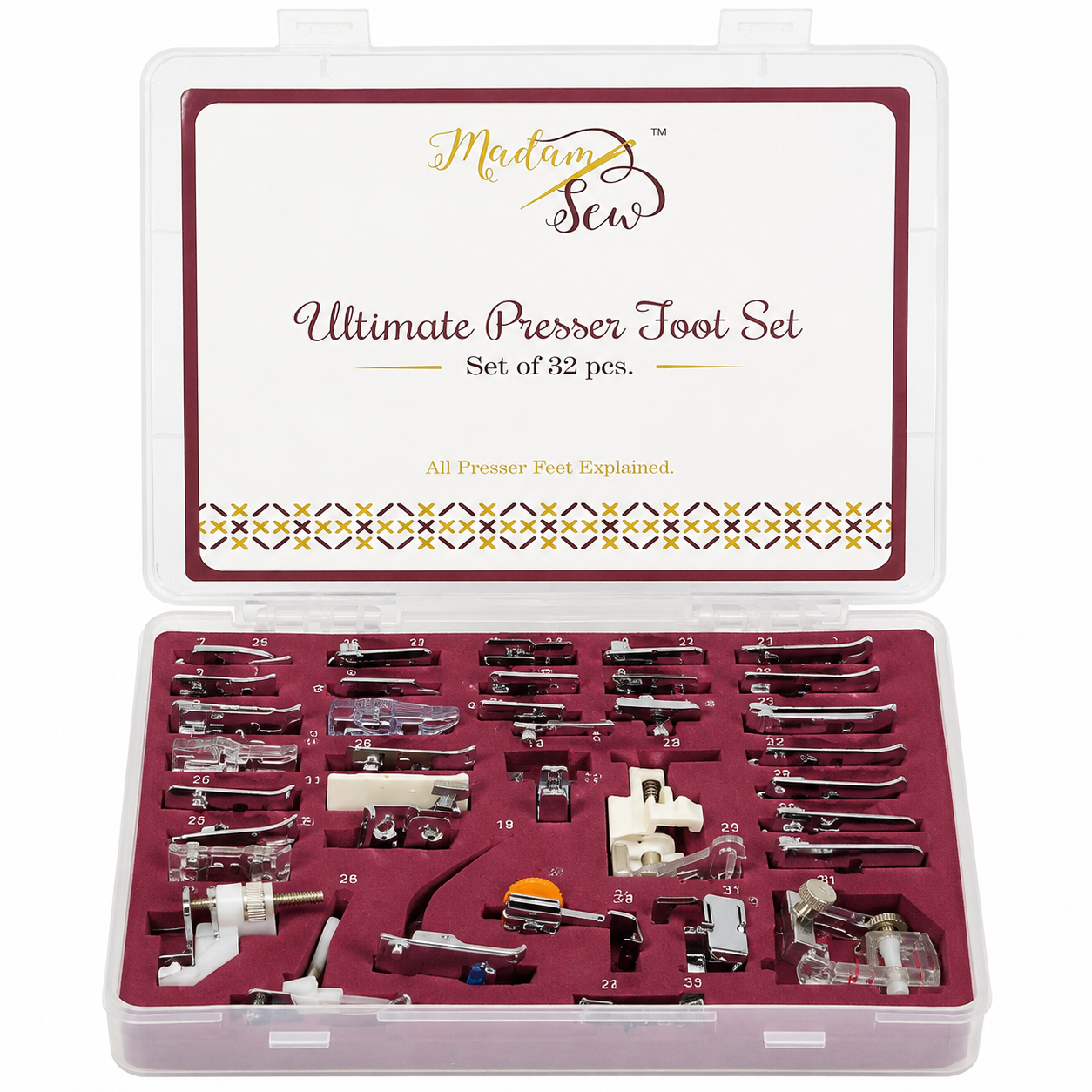
A few of my personal favorites from the set:
Invisible zipper foot — makes zipper installation so much cleaner
Gathering foot — a huge time-saver for ruffles and gathers
Rolled hem foot — perfect for lightweight fabrics and finishing edges cleanly
Blind stitch foot — for invisible hems that look professionally sewn
Overcast foot — a great alternative to the serger for finishing seam allowances
Once you start exploring specialty presser feet, you'll wonder how you ever sewed without them. It genuinely opens up a new level of what's possible with your machine.
Have a question about presser feet or finding the right adapter for your machine? Ask our AI Sewing Coach!
Related reading: What Is a Walking Foot and Why Do You Need One?
AI Sewing Coach
Create a free account to chat with our AI Sewing Coach — trained to help with sewing techniques, troubleshooting, projects, fabric questions, and more!
Comments
Comments are screened by an AI moderator for spam and inappropriate content.
Sign in to join the conversation.
Loading comments…