May 15, 2026 · Sewing Society · 4 min read · Sewing Machine Help & Troubleshooting
Disclosure: As an Amazon Associate, we earn from qualifying purchases. Some links in this post may be affiliate links.
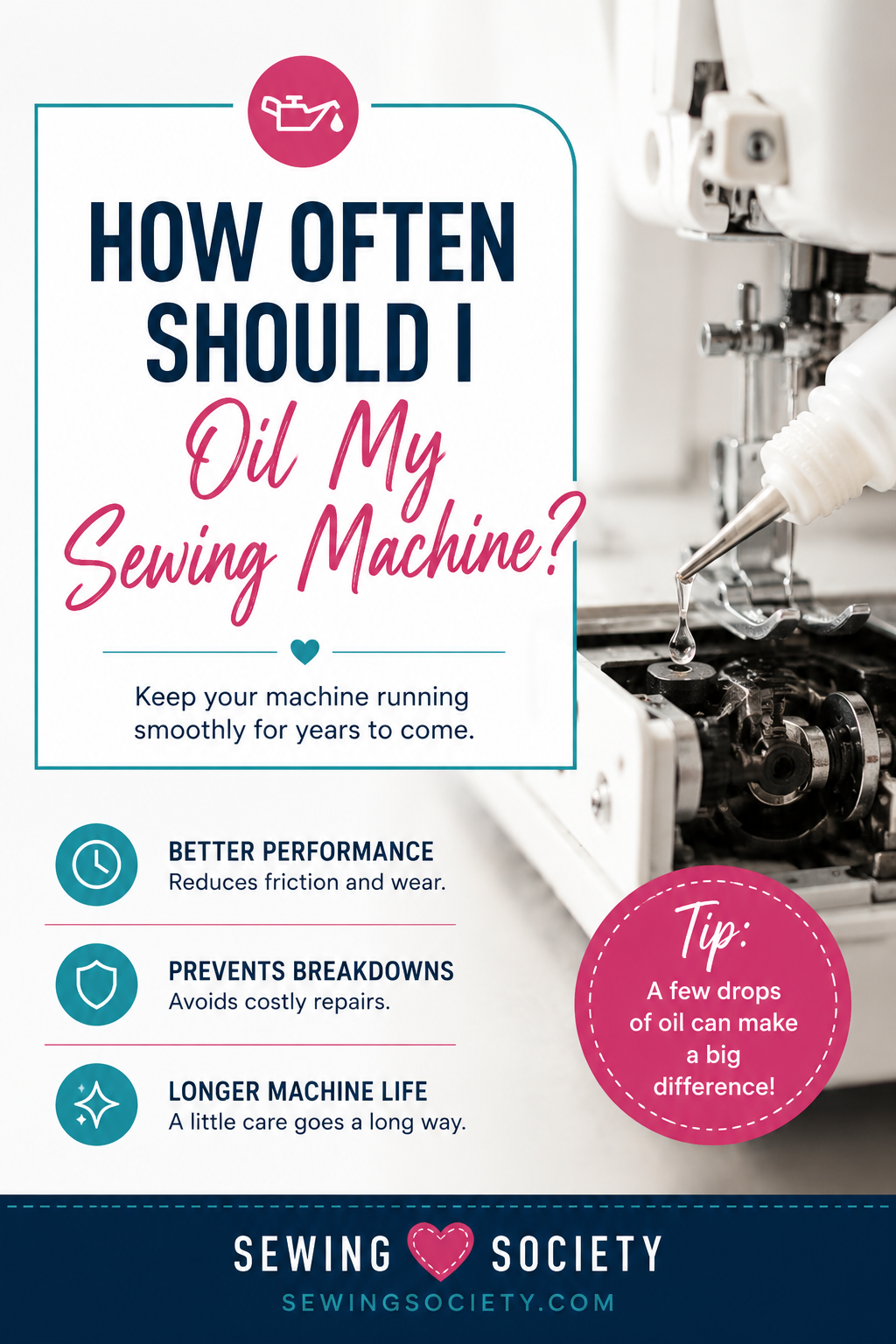
How Often Should I Oil My Sewing Machine?
Not every sewing machine needs oil, and using the wrong type or applying too much can cause as many problems as not oiling at all. This guide covers how to know if your machine needs oil, how often to oil it, which type to use, and a step-by-step process for doing it correctly.

The answer depends on your machine. Your user manual is always the first place to check since every model is different. Here is everything you need to know about oiling your sewing machine correctly.
Does Your Machine Need Oil at All?
Not all sewing machines need manual oiling. Many modern and computerized machines come pre-lubricated from the factory and are designed to be self-lubricating. Adding oil to these machines can actually cause problems by attracting lint and gunking up internal components.
Check your user manual before doing anything. If it says no oiling is required, trust that.
Older and mechanical machines almost always need periodic oiling. If you have a vintage machine and are unsure, call a local sewing machine dealer or repair technician.
How Often Should You Oil?
For machines that do require oil, every three to four months is a reasonable starting point for regular sewists. The more you sew, the more frequently your machine needs lubrication.
Light use (a few projects a year): Once or twice a year
Regular use (weekly sewing): Every three to four months
Heavy use (daily sewing or long sessions): Monthly, or after every 8 to 10 hours of sewing time
Machine stored unused for years: Oil before using and schedule a professional service
Even when a machine sits unused, the lubrication inside dries out over time. If your machine has been in storage for a few years, assume it needs oiling and a full service before you start sewing on it again.
What Type of Oil to Use
Always use oil specifically formulated for sewing machines. It is clear, thin, and designed not to stain fabric. Do not substitute:
Car oil or motor oil: Too heavy and will damage delicate internal parts
WD-40: This is a rust remover and water displacer, not a lubricant. It breaks down quickly and leaves residue.
Cooking oil or baby oil: Goes rancid over time and attracts lint
3-in-1 oil: Generally too heavy for sewing machines
If your manual does not specify a brand, any generic clear sewing machine oil works fine. The key is that it must be clear and lightweight.
Where to Apply Oil
Your user manual should include an oiling diagram for your specific model. General oiling points that most machines share include:
The hook race (shuttle race) in the bobbin area. This is the most critical oiling point. A dry hook race causes friction, skipped stitches, and thread breakage.
The handwheel and its connecting rod
The thread take-up lever and its pivot point
Other moving metal parts inside the machine, particularly anywhere two metal surfaces contact each other
Apply only one to two drops at each point. More is not better. Too much oil attracts lint, drips onto your fabric, and can clog fine mechanical parts.
Step-by-Step Oiling Process
Step 1: Clean the machine first. Never oil a dirty machine. Lint and dust mixed with fresh oil forms a paste that clogs moving parts and makes problems worse. Remove the bobbin, brush out all lint from the bobbin case and hook area, and wipe down any accessible surfaces before applying oil. Read the post on how to clean your sewing machine if you need guidance.
Step 2: Consult your manual for the oiling diagram. Every model is slightly different. Some machines require you to remove a panel or partially disassemble to reach all oiling points. Follow the diagram exactly.
Step 3: Apply one to two drops per point. One drop at each oiling point is usually sufficient. Let it settle briefly before moving to the next spot.
Step 4: Wipe away any excess. Use a clean, lint-free cloth to wipe off oil that did not absorb. Pay extra attention to the area around the needle and throat plate where oil could transfer directly onto your fabric.
Step 5: Run the machine on scrap fabric before sewing. Run your machine at medium speed for 30 to 60 seconds on a scrap piece of fabric. This distributes the oil evenly through the moving parts and lets any residual excess transfer to the test fabric instead of your project. Discard the test fabric.
Step 6: Test that everything works properly. If your machine sounds smooth and stitches correctly on the test scrap, you are good to go. If it sounds rough or skips stitches, double-check that everything was reassembled correctly and that you did not over-oil.
When to Schedule a Professional Service
 Pin It
Even with consistent at-home oiling, a professional tune-up every one to two years is worth it. A technician can oil internal parts you cannot easily reach, check and adjust the timing, tighten internal screws, and spot wear before it becomes a costly repair.
If your machine is noisy, skipping stitches, or feels stiff even after oiling, do not wait for your next scheduled service appointment.
Related reading: Why Does My Sewing Machine Run Slow?
AI Sewing Coach
Create a free account to chat with our AI Sewing Coach — trained to help with sewing techniques, troubleshooting, projects, fabric questions, and more!
Comments
Comments are screened by an AI moderator for spam and inappropriate content.
Sign in to join the conversation.
Loading comments…