July 4, 2026 · Sewing Society · 2 min read · Sewing Tips & Hacks
Disclosure: As an Amazon Associate, we earn from qualifying purchases. Some links in this post may be affiliate links.
How To Clean Goo from an Iron
Learn how to clean your iron quickly and easily, including how to remove stubborn fusible interfacing glue. A few minutes of regular maintenance keeps your iron gliding smoothly and your projects looking their best.

Over time, residue from starch, fusible products, and hard water builds up on your iron's soleplate. When that happens, your iron may drag across fabric, stop steaming properly, or transfer stains onto your projects. Cleaning your iron regularly keeps it gliding smoothly, steaming properly, and protecting the fabric you've worked hard on.
What You'll Need
Iron cleaning paste (such as Dritz Iron-Off)
Clean towel or flannel cloth
How to Clean an Iron
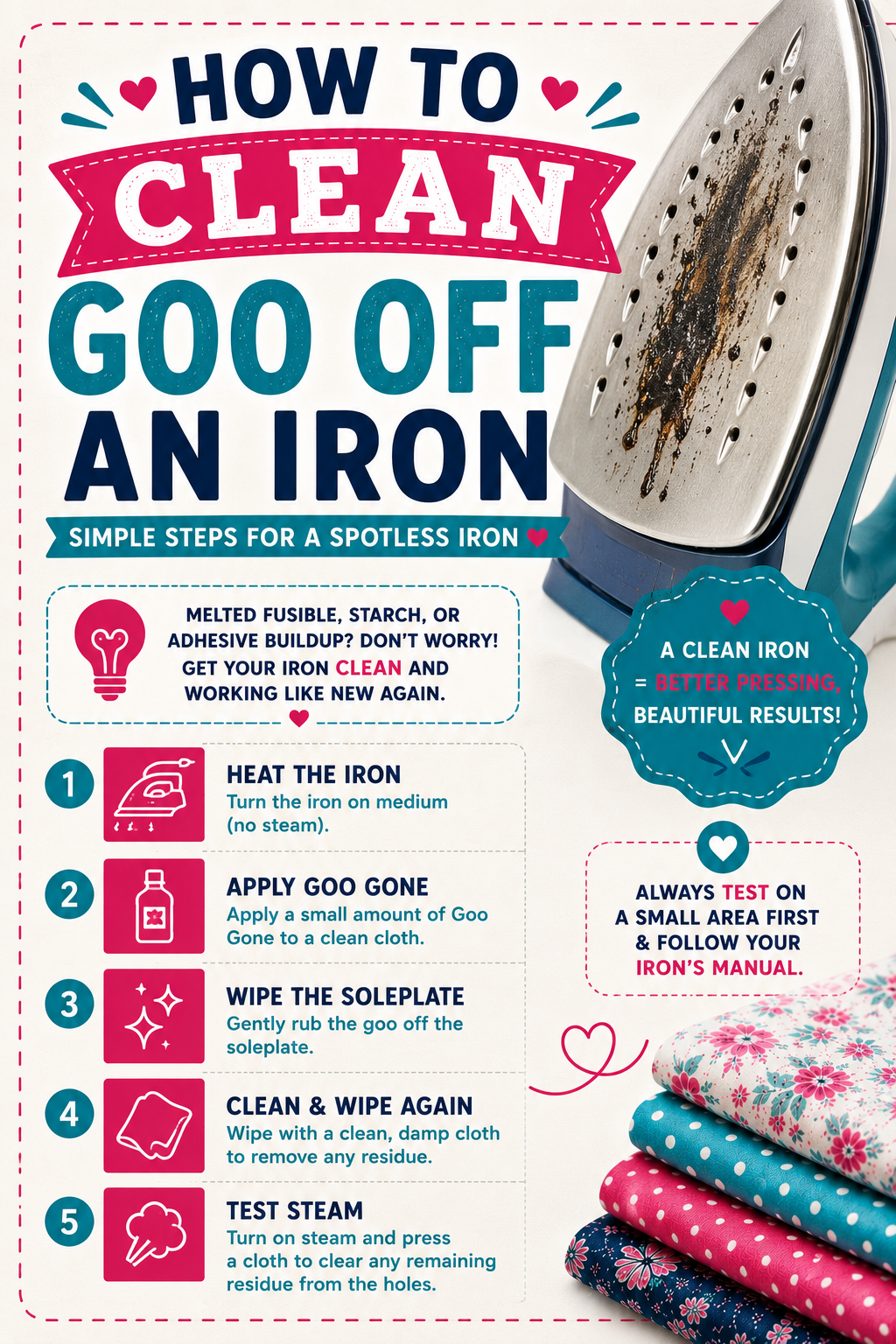
Begin by emptying all the water from your iron and heat it to the highest setting. Squeeze 1–2 inches of cleaning paste onto a folded cloth and rub it across the hot soleplate. You'll see residue transfer onto the cloth almost immediately. For heavy buildup, repeat the process, using a clean section of cloth each time. Once the soleplate looks clean, wipe it down with a fresh cloth to remove any remaining paste.
Some light smoking and odor during cleaning is completely normal.
How To Remove Fusible Interfacing Glue
Fusible interfacing glue is one of the most common — and stubborn — types of buildup on an iron. If you've accidentally ironed directly onto interfacing or missed a parchment paper barrier, you'll likely end up with melted adhesive stuck to your soleplate. The good news is it comes off with the right approach.
Heat your iron to a medium-high setting and rub the soleplate over a dryer sheet or a cloth dampened with white vinegar. Both help loosen and dissolve the adhesive. For more stubborn spots, apply iron cleaning paste directly to the affected area while the iron is hot and work it in with a cloth. Avoid using anything abrasive like steel wool or scouring pads, as these can scratch and permanently damage the soleplate.
 Pin It
Going forward, always use a Teflon pressing sheet or parchment paper as a barrier when working with fusible interfacing to prevent glue from transferring to your iron in the first place.
If you sew regularly or use fusible interfacing, starch, or adhesive stabilizers, aim to clean your iron once a month. A few minutes of maintenance goes a long way toward better pressing results and a longer-lasting iron.
Related reading: How to Make Bias Tape (Quick, Easy, and Painless)
AI Sewing Coach
Create a free account to chat with our AI Sewing Coach — trained to help with sewing techniques, troubleshooting, projects, fabric questions, and more!
Comments
Comments are screened by an AI moderator for spam and inappropriate content.
Sign in to join the conversation.
Loading comments…