January 1, 2026 · Sewing Society · 2 min read · Learn to Sew, Fabric Guides
Disclosure: As an Amazon Associate, we earn from qualifying purchases. Some links in this post may be affiliate links.
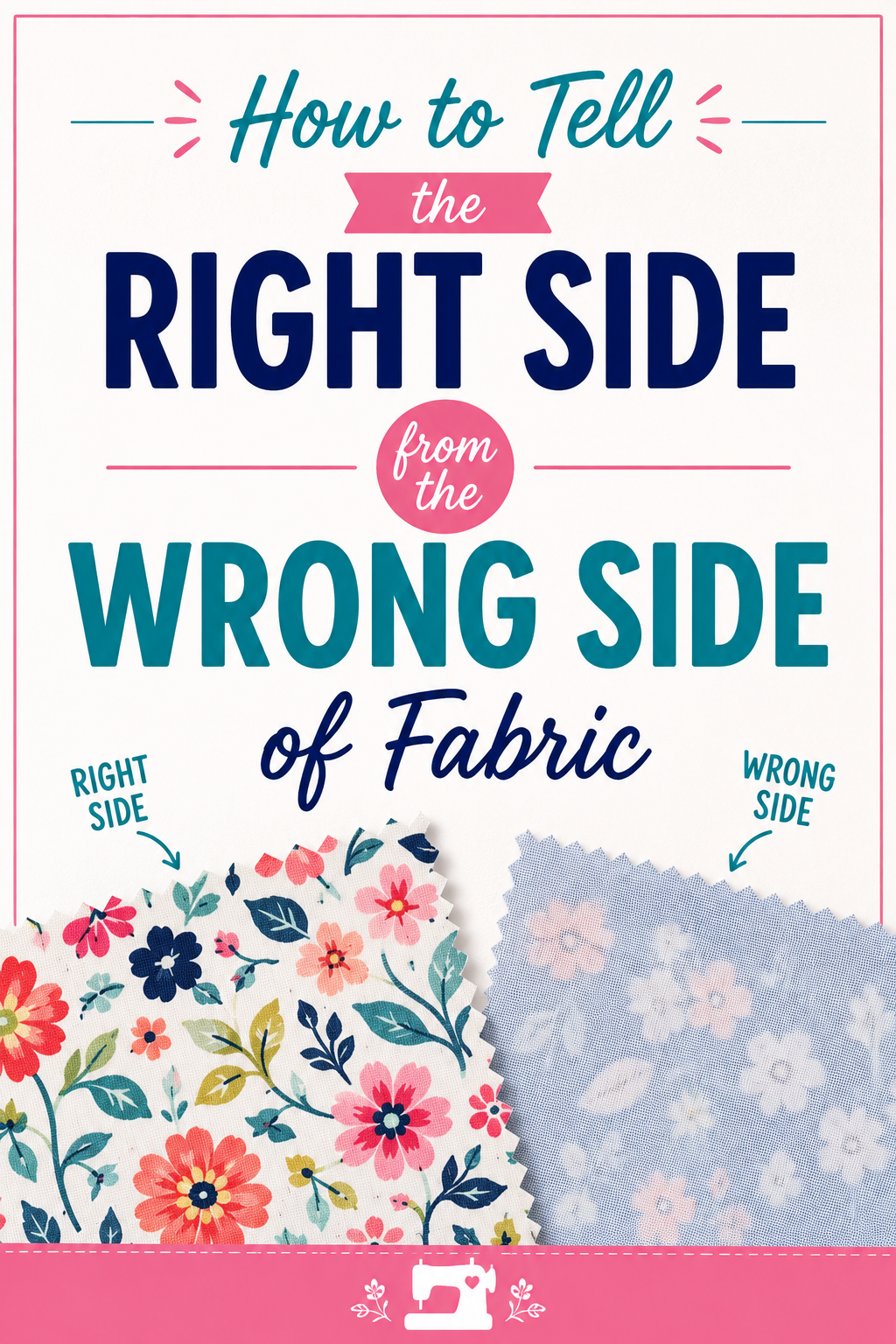
How to Tell the Right Side from the Wrong Side of Fabric
Not sure which side of your fabric is the right side? For printed fabrics it's obvious, but solids can be genuinely tricky. Here's a quick guide to identifying the right side versus the wrong side on the most common fabric types, from woven cotton and jersey to satin, fleece, and double-brushed poly.

The right side of your fabric is the side that should be visible when your finished project is complete. But how do you figure out which side that is before you start sewing?
Sometimes it's easy, especially when you're working with a printed fabric. But solid-colored fabrics can be genuinely tricky. The good news is that every type of fabric has its own telltale signs. Here's a guide to the most common ones!
Woven Cotton
Woven cotton is one of the easier fabrics to identify. In most cases, the right side has a more vibrant color or print, while the wrong side looks duller or washed out. For solids, you may have to look closely, but the right side will have a slightly crisper, cleaner appearance.
Single Knit Fabric
Single knit can be a little tricky, especially if the knit is fine. Look at the surface of the fabric: the right side shows vertical rows of V-shapes running down the length of the fabric. The wrong side shows small horizontal curves or loops running across the width.
Jersey Fabric
Jersey is technically a single knit, so the same V vs. loop rule applies. But there's an extra trick: look at the cut edge and the selvage edge.
The selvage (the finished, tightly woven edge along the sides of the fabric) will curl toward the wrong side.
The cut edge will curl toward the right side.
This curl trick is one of the quickest ways to identify jersey once you know it!
Double-Brushed Poly (DBP) and Double Knit
Double-brushed poly is probably the hardest fabric on this list to identify. Both sides can look very similar, especially in solid colors. Many sewists just pick a side and use it consistently throughout their project, which is a perfectly fine approach.
That said, if you look at both sides in good lighting, the right side of DBP typically has a slight sheen and appears a bit more vibrant than the wrong side.
Velvet and Corduroy
These are easy ones. Both velvet and corduroy have a distinct texture or nap on one side only. The side with the texture and pile is the right side.
Satin and Silk
Also easy! The right side is the shiny side. The wrong side is noticeably duller. You really can't miss it.
Fleece
Fleece can be tricky on its own, but here's a reliable trick: hold the fabric horizontally with the cut edge at the top. When you pull the fabric gently, the cut edge will curl toward the wrong side.
 Pin It
If you bought custom-printed fleece, look for the side that is smooth versus the side that is slightly textured. The smooth side is the right side.
Hopefully this helps you feel more confident before you cut! If you're working with a fabric not on this list and you're not sure which side is which, leave a comment below and I'll do my best to help.
Related reading: How to Choose Fabric for a Sewing Project (Questions to Ask Yourself First)
AI Sewing Coach
Create a free account to chat with our AI Sewing Coach — trained to help with sewing techniques, troubleshooting, projects, fabric questions, and more!
Comments
Comments are screened by an AI moderator for spam and inappropriate content.
Sign in to join the conversation.
Loading comments…