March 6, 2026 · Sewing Society · 3 min read · Sewing Room & Organization
Disclosure: As an Amazon Associate, we earn from qualifying purchases. Some links in this post may be affiliate links.
No Sewing Room? Here's How to Create a Sewing Space Anyway
A productive sewing room isn't about the size of the space, it's about how well it's set up. Whether you're sewing in a dedicated studio or a converted laundry room like me, these five tips cover lighting, seating, cutting tables, pressing stations, and organization to help you sew more comfortably and get more done.

When my husband started working from home, he took over my sewing room for his home office. I was temporarily relocated to the kitchen table.
I know. Not fun.
I do a lot of sewing, so the kitchen table was never going to be a permanent solution. Setting up and tearing down every single time I wanted to sew was exhausting. After some creative thinking, I turned our tiny laundry room into my new sewing space, and honestly? It works really well.
If you're working with a small or awkward sewing space, a little organization and planning goes a long way. Here are five tips that have made a real difference in my productivity.
1. Get Your Lighting Right
Good lighting is non-negotiable. Dim spaces strain your eyes, make threading needles miserable, and make it genuinely harder to read pattern instructions or spot mistakes in your stitching.
I dream of a bright, sun-filled sewing room someday. Maybe a she shed with big windows. For now, I have a desk lamp positioned right at my sewing table, and it makes a noticeable difference. Whatever your space looks like, make sure you have focused task lighting exactly where you need it most.
2. Invest in a Good Sewing Chair
This is one of the best things you can do for your sewing room, and one of the most overlooked. Poor posture causes neck, back, and shoulder soreness, and you will not sew for long if you're uncomfortable.
I use a standard computer desk chair with adjustable height and lumbar support. A swivel chair on casters is ideal because you can move around easily. Set it so you can sit all the way back with your feet flat on the floor and your knees at a comfortable angle. You should be able to sew without hunching forward. Your body will thank you.
3. Use a Counter-Height Cutting Table
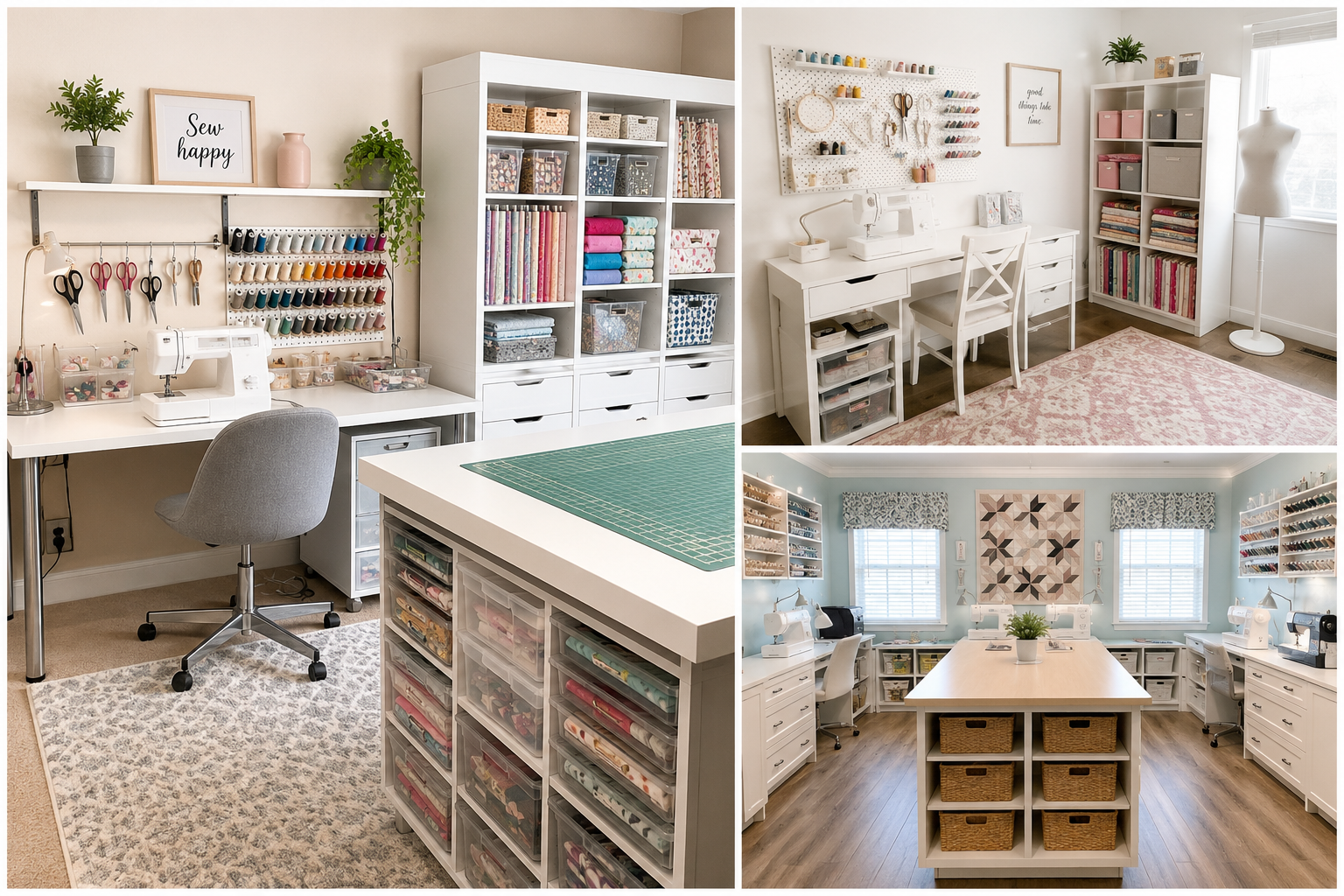
Cutting fabric on a standard dining room table means bending over awkwardly for extended periods, and that wears you out fast. A counter-height cutting table lets you work in a more upright position, which reduces fatigue significantly.
I use a Sew Ready Studio Designs folding cutting table. I love that it folds up and rolls away when I'm not using it, which is essential in a small laundry room. If you're in a tight space, a foldable table like this is worth every penny.
4. Set Up a Dedicated Pressing Station
Every time you have to drag out a full ironing board just to press a seam, it slows you down. A small, dedicated pressing station within easy reach of your machine changes everything.
My setup is simple: I have a magnetic ironing mat on top of my dryer. It works perfectly for pressing as I sew and I only pull out the big ironing board for larger projects like pants or dresses. If your ironing board is adjustable in height, set it so you can press without hunching.
5. Organize Your Supplies So You Can Find Things Fast
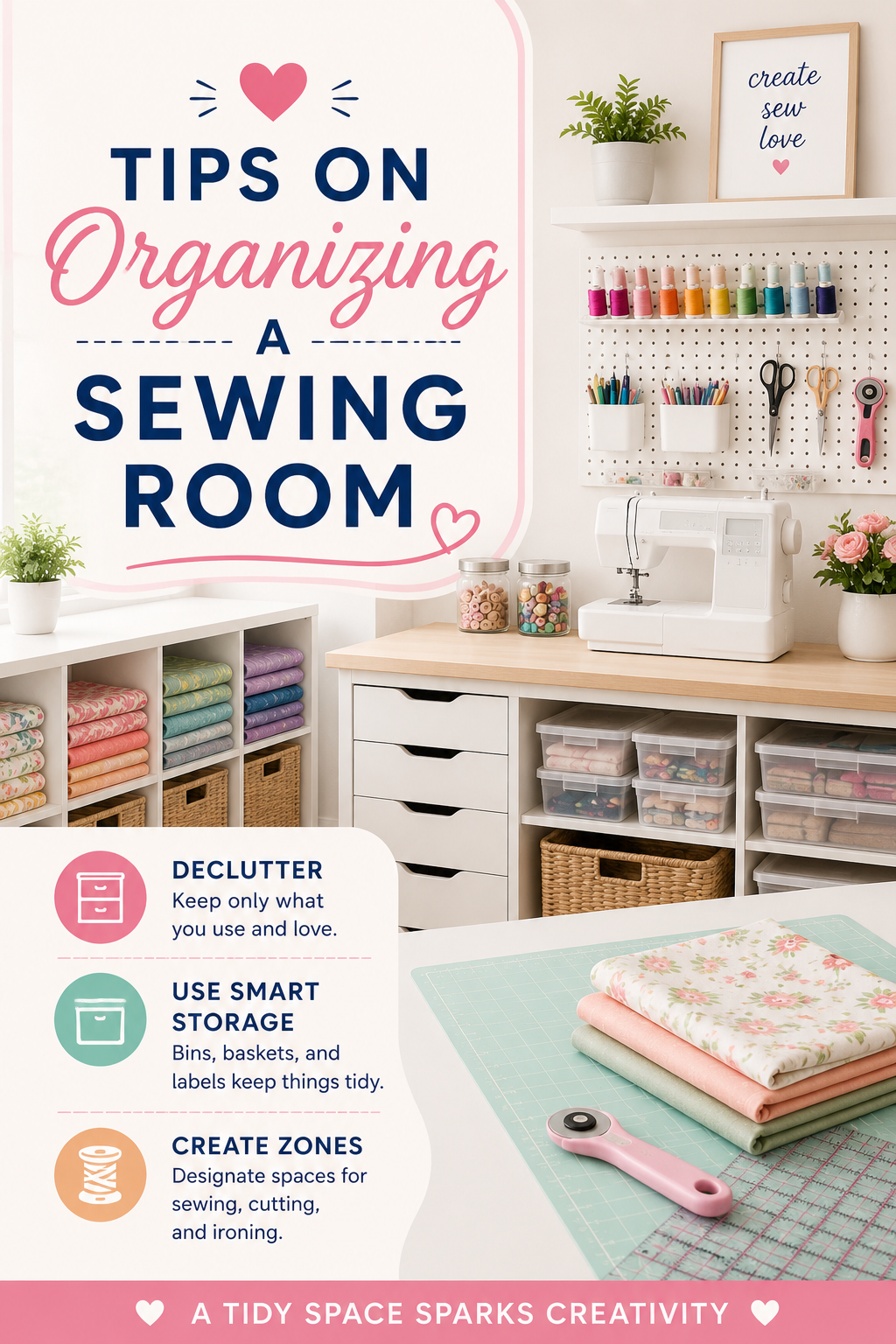
Searching for a seam ripper or a specific spool of thread in a disorganized space is a productivity killer. You don't need a perfect system, just a consistent one.
Here's what works for me:
Clear Sterilite drawers for notions and small supplies. Being able to see everything at a glance saves so much time.
A portable toolbox for the tools I reach for constantly, like scissors, a seam ripper, pins, and marking tools.
Wall cabinets for fabric storage to keep everything off the work surfaces.
Find a system that matches your space and your habits, and then stick to it. A tidy, organized sewing room makes you want to sew more.
 Pin It
A functional sewing room doesn't have to be big or fancy. Mine is a laundry room and it works great. The key is having everything you need within reach and set up in a way that minimizes the friction between you and your next sewing project.
Do you have any sewing room organization tips to share? I'd love to hear them in the comments below!
Related reading: Sewing Machine Withdrawals Are Real (Send Help)
AI Sewing Coach
Create a free account to chat with our AI Sewing Coach — trained to help with sewing techniques, troubleshooting, projects, fabric questions, and more!
Comments
Comments are screened by an AI moderator for spam and inappropriate content.
Sign in to join the conversation.
Loading comments…