June 12, 2026 · Sewing Society · 3 min read · Learn to Sew, Sewing Tools & Reviews, Sewing Tips & Hacks
Disclosure: As an Amazon Associate, we earn from qualifying purchases. Some links in this post may be affiliate links.
How to Use a Seam Ripper (4 Easy Methods)
Mistakes are part of sewing, even for experienced sewists. Learn how to use a seam ripper with four simple techniques, so you can unpick stitches cleanly and protect your fabric every time.

Everyone makes mistakes occasionally when they sew. Even after 20+ years at the sewing machine, I still find myself reaching for my seam ripper regularly. It's one of the most underrated tools in any sewing kit, and knowing how to use it correctly can save your projects, your fabric, and your sanity.
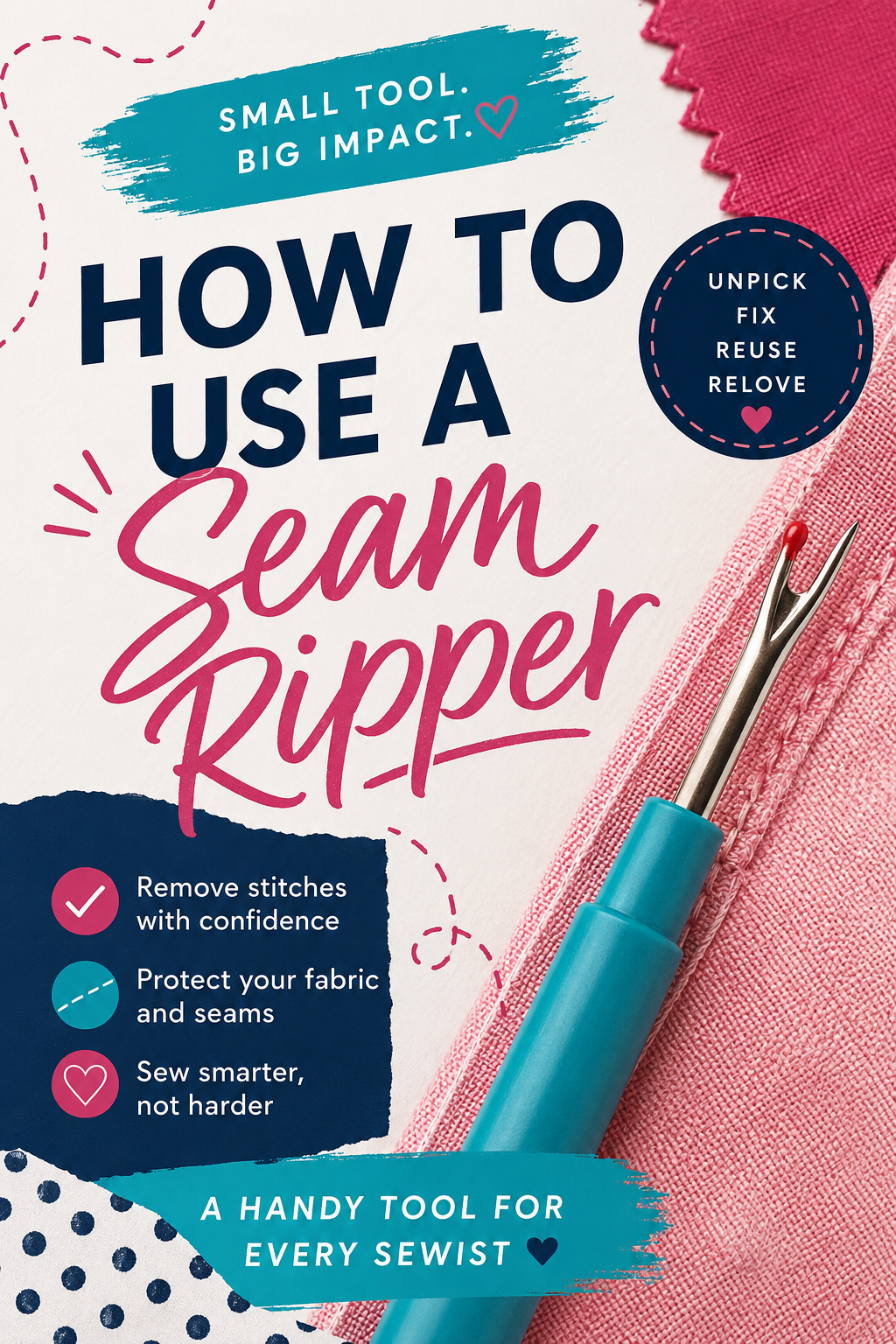
A seam ripper is a small, handheld tool with three key parts: a sharp point for slipping under stitches, a small knife edge for cutting thread, and a ballpoint tip that glides against your fabric without piercing it. Simple in design, but incredibly useful.
The most important rule before we dive in: always keep the sharp end of the seam ripper pointed away from your body.
There's no single "right" way to remove stitches. The best method depends on your fabric type, stitch length, and where the stitches are located on your project. Here are four techniques to have in your toolkit.
1. One Quick Run
The fastest method of all. Working from the right side of your fabric, position the seam ripper so the ballpoint slides underneath the row of stitches and the point faces upward. Push the seam ripper smoothly along the seam in one continuous motion. The knife edge cuts through the stitches as you go. Brush away the small thread pieces left behind, or use a lint roller to clean up.
Best for: Large amounts of stitches on sturdy, stable fabrics like quilting cotton.
Avoid on: Delicate fabrics such as satin, chiffon, or knits because you risk tearing a hole.
2. Cut a Thread and Rip
Slip the sharp point of the seam ripper under a single stitch near the start of your seam and cut it. Then grip the two pieces of fabric and gently pull them apart to pop the next few stitches open. When the fabric resists, cut another stitch and repeat.
Best for: Medium-weight fabrics where a quick finish is needed.
Avoid on: Stretchy or delicate fabrics, as pulling can distort the weave or cause damage.
3. Pull One Thread
This is my personal favorite for a clean finish. Cut one stitch with your seam ripper, then gently pull the thread from one end of the seam. It will slide out smoothly, taking the rest of the stitches with it. No mess, no scattered thread pieces.
Best for: Long stitch lengths like basting stitches, or fabrics with a looser weave.
Avoid on: Short stitch lengths, where the thread is too tightly locked to pull cleanly.
4. Remove One Stitch at a Time
Sometimes slow and steady is the only option, especially for tiny stitches or areas where you’ve sewn repeated stitches. Slip the pointed tip under one stitch, cut it, and move on to the next. Repeat until the stitches are removed.
Best for: Very short stitch lengths, delicate or sheer fabrics, and tight areas like corners or appliqué edges.
Tips for Getting the Most from Your Seam Ripper
Replace it regularly. The blade dulls with use, so swap it out every year or two for clean, effortless cutting.
Keep multiples on hand. I have one at my sewing machine, one at my cutting table, and a spare in my supply drawer. You'll be surprised how often you reach for it.
Choose an ergonomic handle. If you're unpicking a lot of stitches, a comfortable grip makes a real difference.
 Pin It
The more you practice, the faster and more confident you'll become. A seam ripper isn't a sign of failure. It's just part of sewing! I always tell my students that practically no one escapes my classes without using one.
How many seam rippers do you have in your sewing space? Drop a comment below — I'd love to know! I counted and I have six.
Related reading: Meet Your New AI Sewing Coach (And Why I'm So Excited About It)
AI Sewing Coach
Create a free account to chat with our AI Sewing Coach — trained to help with sewing techniques, troubleshooting, projects, fabric questions, and more!
Comments
Comments are screened by an AI moderator for spam and inappropriate content.
Sign in to join the conversation.
Loading comments…