January 23, 2026 · Sewing Society · 3 min read · Sewing Machine Help & Troubleshooting, Learn to Sew
Disclosure: As an Amazon Associate, we earn from qualifying purchases. Some links in this post may be affiliate links.
How to Wind a Bobbin on Your Sewing Machine
Improperly wound bobbins are behind more sewing problems than most people realize. This step-by-step guide covers everything you need to know about winding a bobbin correctly, from choosing the right bobbin for your machine to troubleshooting an uneven wind and even a time-saving shortcut with a stand-alone bobbin winder.

Most problems with machine stitching come down to one thing: improper threading. Either the upper thread track is off, or something is wrong with the bobbin. That's why knowing how to wind a bobbin correctly is one of the most important foundational skills in sewing.
Here's how it all works: the bobbin sits under the needle plate and holds the bottom thread. As the needle passes through the fabric carrying the top thread, the bobbin thread gets caught and the two interlock between the fabric layers. That's how a stitch is formed. If your bobbin is wound unevenly or improperly, your stitches will suffer, and that's often where the frustration starts.
Step 1: Choose the Right Bobbin
Before you wind anything, make sure you're using the correct bobbin for your specific machine. Bobbins come in different styles and sizes, and using the wrong one will affect your stitch quality, even if it technically fits.
Class 15 bobbins are the most common, but check your manual to confirm what your machine takes. Many Brother machines, for example, use a slightly larger bobbin. Using the exact right bobbin style is one of those small things that makes a bigger difference than you'd expect.
Step 2: Set Up Your Machine for Winding
Every machine is a little different, so your manual is your best reference here. Can't find yours? There are free replacement manuals available online for most machines.
Here's the general process:
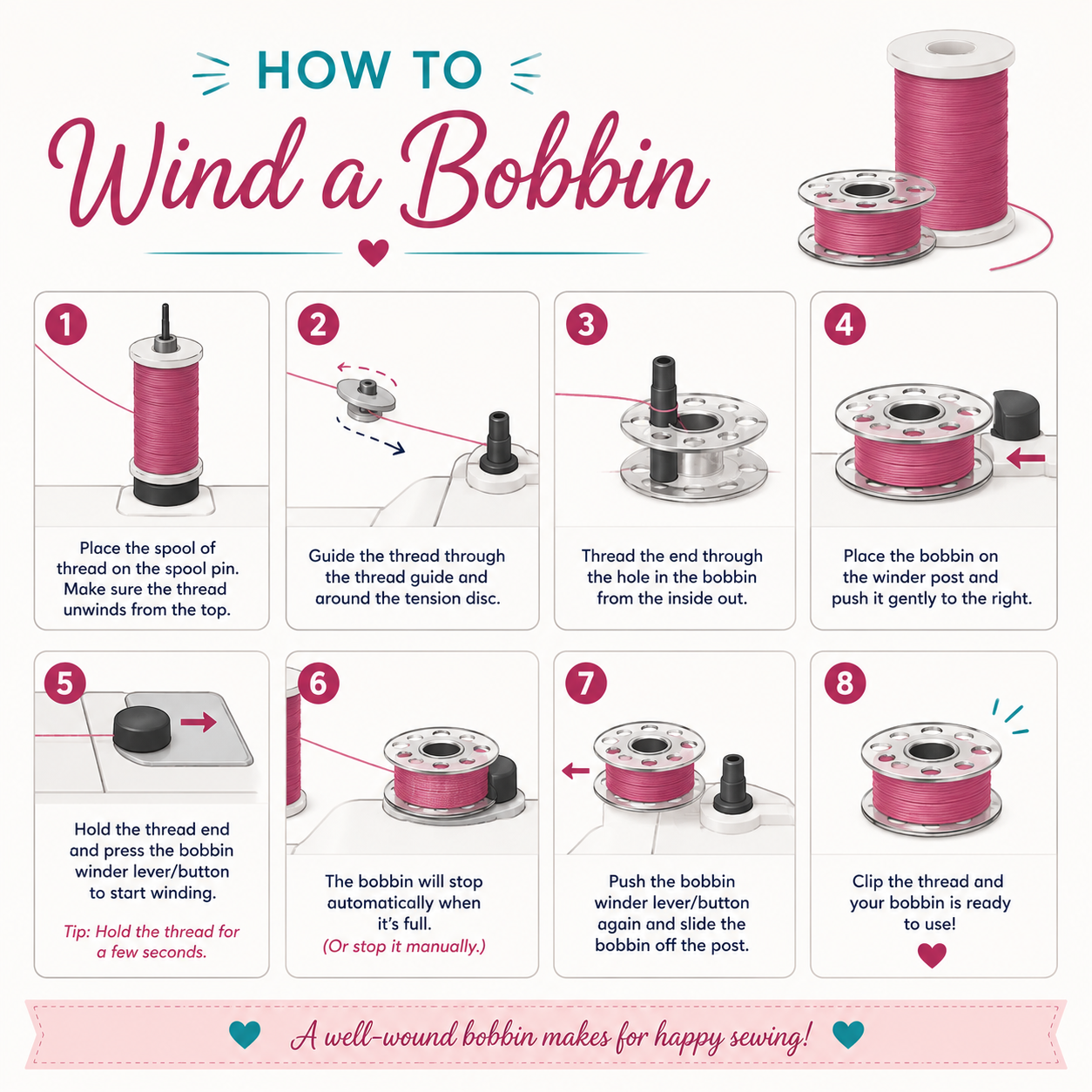
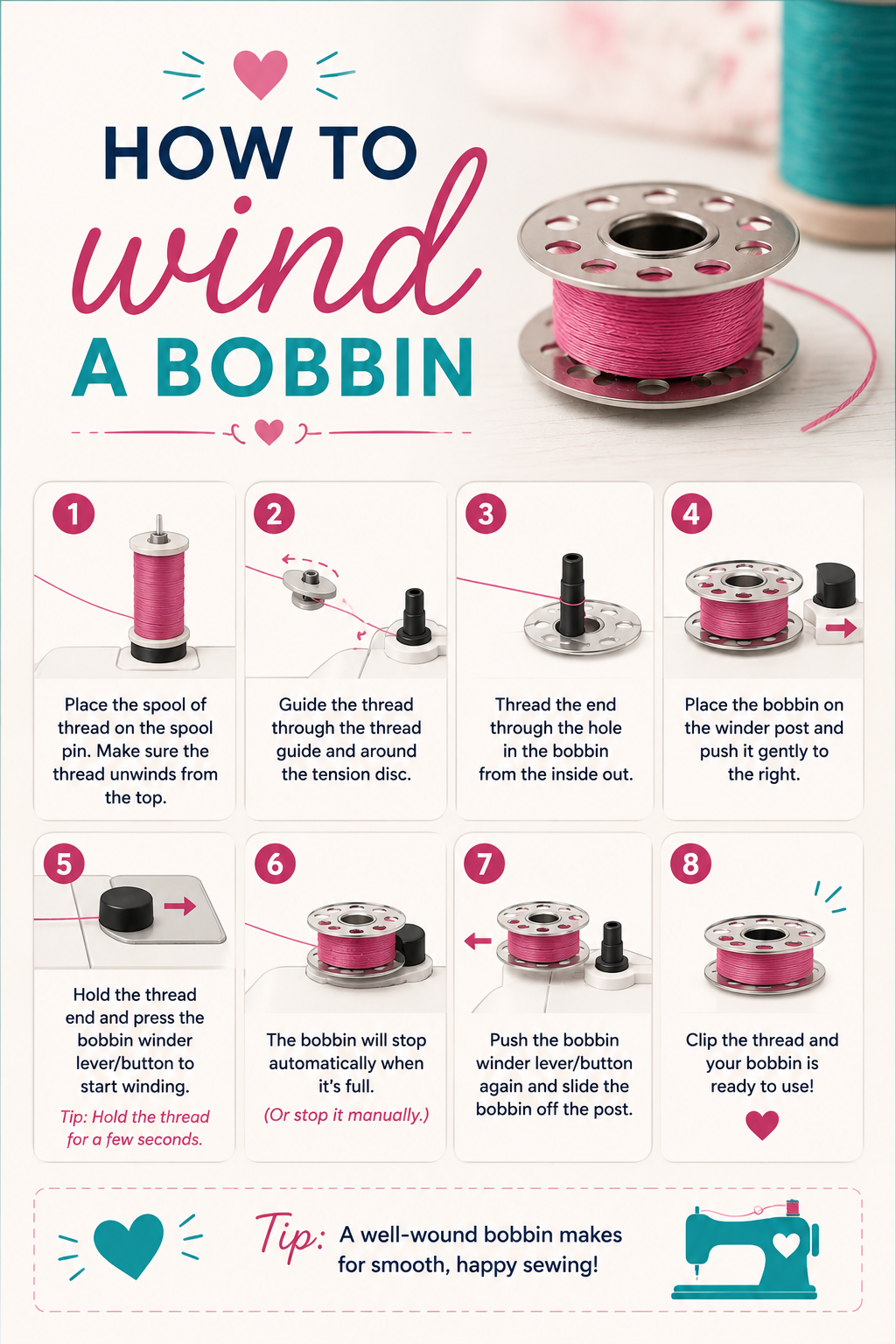
Place your spool of thread on the spool pin at the top of your machine. Make sure it unwinds smoothly without catching.
Pass the thread through the tension disk on top of your machine, following the bobbin winding thread guides. You should feel a slight resistance as you pull the thread through. This tension is what gives your bobbin a nice, even wind.
Thread the end of the thread through the small hole at the top of an empty bobbin. Some machines have a cutter under the bobbin winding pin, or you can hold the end of the thread straight up when winding until it catches.
Place the bobbin on the winding pin and slide or push it to the right to engage the bobbin winder.
On some older machines, you may also need to loosen the center wheel inside the handwheel to disengage the needle before winding. Check your manual for your specific machine.
Step 3: Wind Your Bobbin
Hold the thread end lightly as you start the machine to keep it from slipping. Once the bobbin starts winding, you can cut the end close to the bobbin. The machine will wind the bobbin and stop automatically when it's full on most modern machines.
Your bobbin should wind up smooth and even, with consistent tension throughout. If it looks lumpy, loose, or uneven in spots, something is off.
Troubleshooting Bobbin Winding Problems
If your bobbin isn't winding evenly or the thread feels too loose, the most common cause is that the thread didn't pass through the tension disk correctly. Re-thread the bobbin winding path and try again.
If it's still too loose, you can lightly hold the thread with one finger as it winds to add a little extra tension manually.
Here are some other common bobbin issues worth reading about:
A Handy Shortcut: Stand-Alone Bobbin Winders
If you find yourself constantly switching out bobbins mid-project and don't want to mess with your machine's top thread every time, a stand-alone bobbin winder is a great investment. These battery-operated winders (sometimes called side winders) let you wind bobbins completely independently of your sewing machine. They're small, affordable, and really useful!
Related reading: How to Clean Your Sewing Machine
AI Sewing Coach
Create a free account to chat with our AI Sewing Coach — trained to help with sewing techniques, troubleshooting, projects, fabric questions, and more!
Comments
Comments are screened by an AI moderator for spam and inappropriate content.
Sign in to join the conversation.
Loading comments…