June 4, 2026 · Sewing Society · 3 min read · Patterns & Projects, Sewing Tips & Hacks
Disclosure: As an Amazon Associate, we earn from qualifying purchases. Some links in this post may be affiliate links.
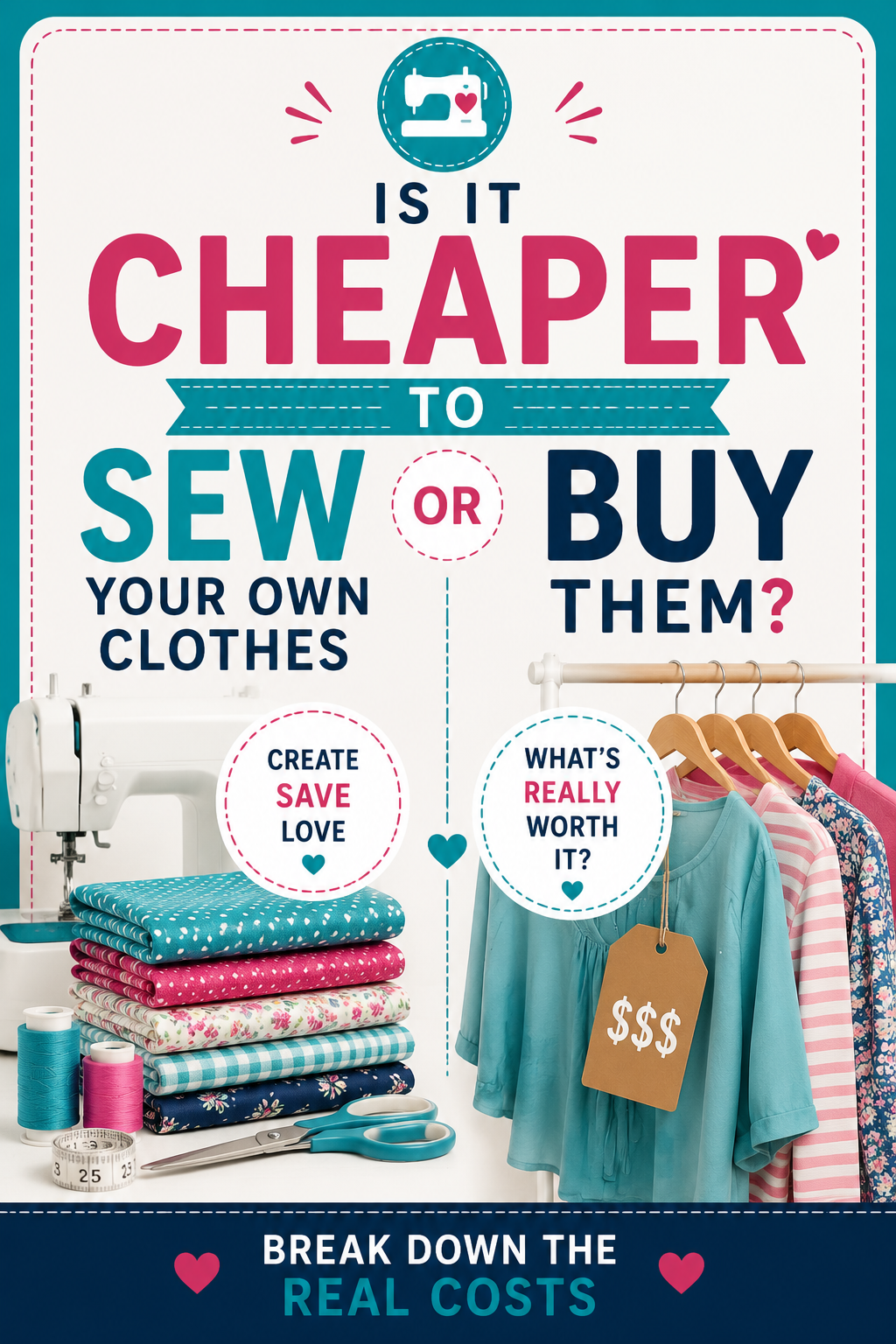
Is It Cheaper to Sew Your Own Clothes or Buy Them?
Is it actually cheaper to sew your own clothes than to buy them? Sometimes yes, sometimes no — it really depends on what you're making and how you shop. Here's an honest look at the real costs involved in sewing your own clothes, including fabric, notions, and patterns, and how to keep those costs lower than the store price.

The honest answer is: it depends.
For something simple like a t-shirt, you're almost certainly better off buying it premade. But for something expensive like a prom dress or a tailored blazer, sewing it yourself can save you a significant amount of money.
I make this decision on a case-by-case basis. If I think I can sew something for less and I have the time to do it, I'll make it myself. As a general rule, I don't bother sewing something I can buy at the store for under $15 to $20. At that price point, the fabric and notions alone would cost more than just buying it.
Here's what actually factors into the real cost of sewing your own clothes.
Fabric Cost
Fabric is usually the biggest line item in a sewing project budget. If you gravitate toward the nicer stuff — silks, wools, quality knits — the costs add up fast. To keep sewing more affordable than buying, you're generally better off working with cottons and cotton-poly blends, which are the most budget-friendly options.
A few ways to keep fabric costs down:
Use coupons. Most fabric stores run regular promotions.
Check the remnant and discount racks. Remnants are especially useful for smaller projects. Fabric also goes in and out of season just like clothing, so there are regular clearances worth taking advantage of.
Build a fabric stash over time. Buying fabric when it's on sale — even before you have a specific project in mind — helps you keep future project costs low.
Notions Add Up Faster Than You Think
This is where a lot of people underestimate the cost of sewing. You see fabric at $3.99 a yard and think you're getting a great deal, then forget to account for the zipper, buttons, elastic, interfacing, thread, and any other notions the pattern requires. A few dollars here and there adds up quickly.
The same strategies help here: use coupons, stock up on zippers and buttons when they're on sale, and save notions from old clothing you'd otherwise throw out. Over the years I've built up a solid supply of buttons and zippers at home that I can pull from for new projects without spending anything.
Don't Forget the Pattern
Patterns are an upfront cost that often gets overlooked. Commercial patterns at full price can be surprisingly expensive, and even though you can reuse them, that initial investment still counts.
I make it a rule not to buy a pattern unless it's under $10, and I watch for sales where my fabric store occasionally marks them down to $1.99. Indie PDF patterns from designers like Peek-a-Boo Pattern Shop and Ellie & Mac are another great option — they're often more affordable than commercial patterns, and many come with step-by-step sew-alongs that make them faster and easier to use.
Once you've been sewing for a while, you'll have a pattern library to pull from and won't need to buy as many new ones. And if you eventually want to try drafting your own patterns, that's free — though it takes practice to get right.
 Pin It
Yes, you can sew clothes for less than you can buy them — but it requires some intentionality. Stay away from expensive fabric, stock up on notions during sales, use coupons consistently, and be selective about the patterns you buy. Do all of that and sewing your own clothes can absolutely be the more affordable option, especially for anything that would cost a lot ready-made.
What do you find cheaper to sew versus buy? I'd love to hear your thoughts in the comments!
Related reading: 5 Reasons Every Sewist Should Try PDF Patterns
AI Sewing Coach
Create a free account to chat with our AI Sewing Coach — trained to help with sewing techniques, troubleshooting, projects, fabric questions, and more!
Comments
Comments are screened by an AI moderator for spam and inappropriate content.
Sign in to join the conversation.
Loading comments…