July 24, 2026 · Sewing Society · 4 min read · Sewing Machine Help & Troubleshooting, Sewing Tips & Hacks, Sewing Machines
Disclosure: As an Amazon Associate, we earn from qualifying purchases. Some links in this post may be affiliate links.
The Sewing Machine Accessibility Feature Hiding in Plain Sight
A customer's question about her daughter, who uses a wheelchair, led me to show her a sewing machine feature most sewists don't know exists.

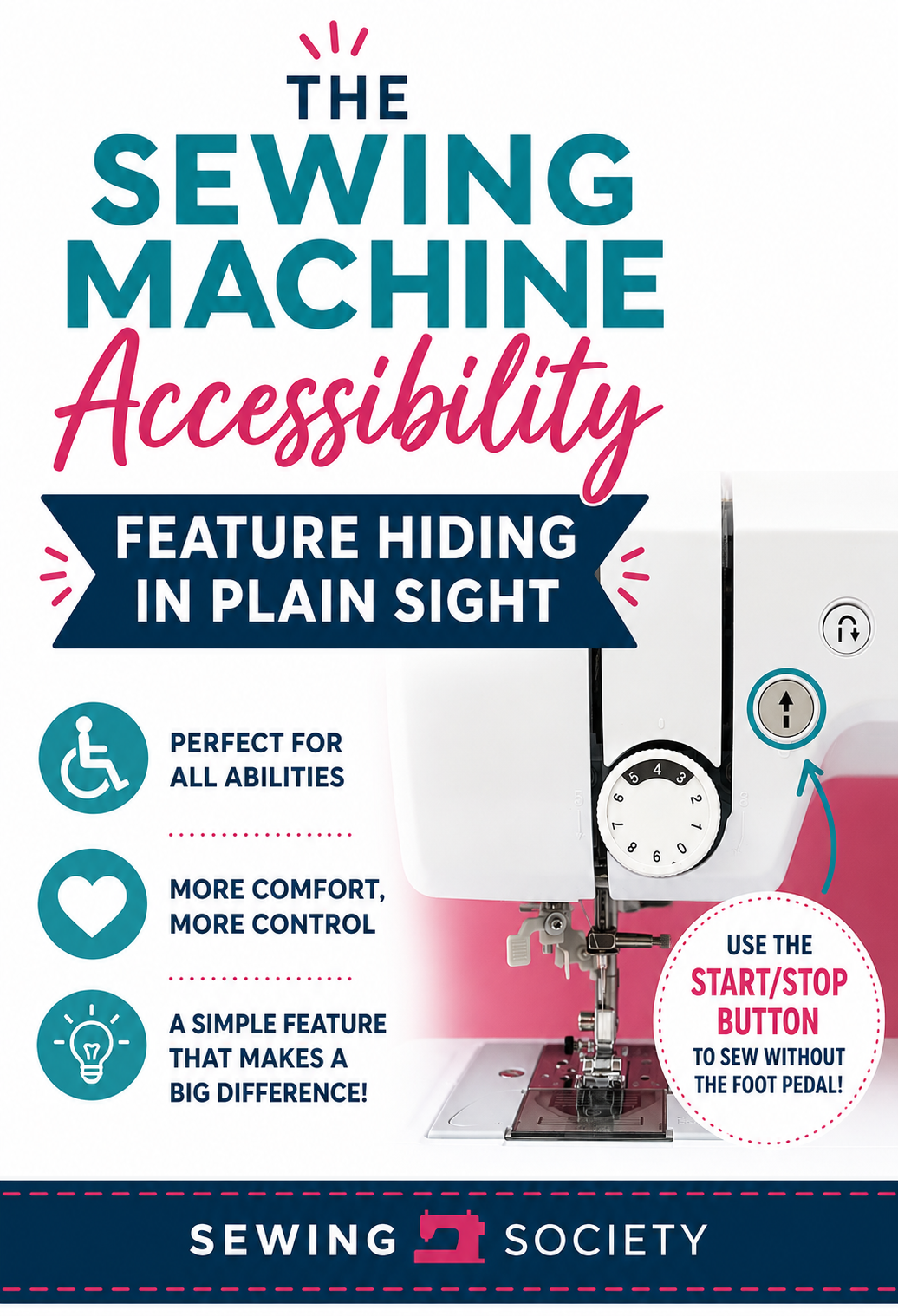
I recently had a customer tell me her daughter, who uses a wheelchair, wanted to learn how to sew. I got to show her something really cool that made her light up. The Brother CS7000X has a start/stop button built right into the machine for foot-free sewing. Unplug the foot pedal, and you can run the machine with the push of a button instead of the foot pedal!
How It Works
Many computerized sewing machines have this “no-pedal required” accessibility feature. If you’re interested, look for a sewing machine that has a start/stop button.
It's simpler to use than people expect:
Unplug the foot pedal from the machine.
Find the start/stop button. It's the one with the arrow on it, located closest to the needle.
Press it once and the machine starts sewing on its own.
Press it again to stop.
Machines that have a start/stop button also have a speed control slider so you can dial the machine down to a crawl while you're getting used to it, or speed things up once you're comfortable. You're not stuck picking one speed and hoping for the best.
Why This Matters
This feature exists specifically so people who can't (or don't want to) use a foot pedal still have full control over the machine. For my customer's daughter, it meant she could sit at the machine and sew on her own terms, no assistance needed to start or stop a seam.
But accessibility features aren't only for people who need them out of necessity. I know plenty of sewists who just prefer sewing this way. Maybe your foot gets tired during a long project. Maybe you like keeping both hands on the fabric at all times. Maybe the foot pedal has just never felt natural to you. Whatever the reason, the start/stop button gives you another way to sew that some machines simply don't offer.
I've noticed a lot of sewists have no idea this start/stop button even exists, let alone what it's for. It's easy to overlook when you're used to the foot pedal being the only way to control your machine. But if you or someone you're teaching has limited mobility, a mobility aid, or just wants a break from the pedal, it's worth checking if your machine has this option.
If you're shopping for a machine with accessibility in mind, or you're a teacher who wants to be ready for a student who needs this, the start/stop button is one small detail that can make a big difference in whether someone gets to sew at all.
Other Accessibility Features Worth Knowing About
The start/stop button isn't the only feature out there built to make sewing more accessible. Once I started paying attention, I realized a lot of these features have been sitting on machines for years, quietly helping people who need them.
Knee lift. This one raises and lowers the presser foot using your knee instead of your hand. It's a lever installed under the table that you nudge with your knee, freeing up your hands to keep guiding the fabric. It's especially helpful if reaching up to the presser foot lever is difficult or if you just want one less hand movement to think about.
Automatic thread cutter. Instead of reaching for scissors or fumbling with a thread cutter on the machine's side, a button trims your top and bobbin threads for you. Small thing, but it matters if grip or dexterity is an issue.
Automatic needle threader. Threading a needle by hand takes steady fingers and good close-up vision. An automatic threader does the work with the push of a lever, which helps a lot of sewists, not just those with a disability.
Automatic presser foot lift. Similar idea to the knee lift, but built into the machine itself. Press a button and the foot goes up on its own instead of needing to be lifted by hand.
 Pin It
Adjustable speed control. I mentioned this with the start/stop button, but it's worth its own callout. Being able to slow a machine all the way down changes the entire experience for someone who's still building control or confidence.
Programmable buttons. Some machines let you assign specific actions (like needle position or reverse stitch) to a button you can access easily, so you're not relying on a single hard-to-reach control for everything.
None of these features get much attention in product marketing, but they can be the difference between someone sewing comfortably and not sewing at all. If you're a teacher, a shop owner, parent, or just someone who wants to make their sewing space more welcoming, it's worth learning what your machines already offer.
AI Sewing Coach
Create a free account to chat with our AI Sewing Coach — trained to help with sewing techniques, troubleshooting, projects, fabric questions, and more!
Comments
Comments are screened by an AI moderator for spam and inappropriate content.
Sign in to join the conversation.
Loading comments…