January 17, 2026 · Sewing Society · 4 min read · Learn to Sew, Sewing Tips & Hacks
Disclosure: As an Amazon Associate, we earn from qualifying purchases. Some links in this post may be affiliate links.
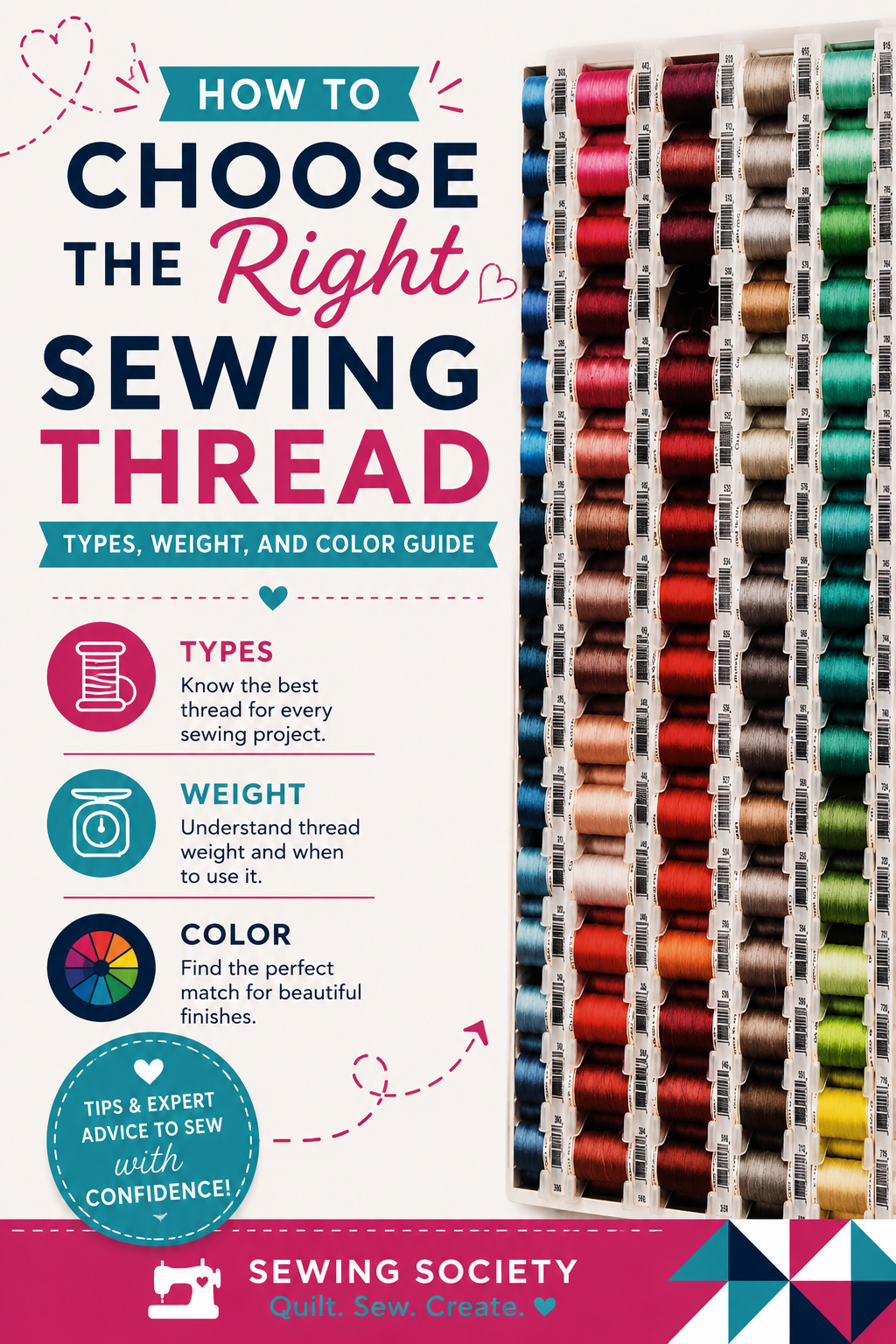
How to Choose the Right Thread for Your Sewing Project
That wall of thread at the craft store doesn't have to be intimidating. From all-purpose and quilting thread to elastic, serger, and topstitching thread, each type has its own strengths and ideal use cases. Here's a clear guide to every thread type, fiber content, weight, and color selection tips so you can choose the right thread with confidence every time.

Have you ever stood in front of the wall of thread at your local craft store and had absolutely no idea where to start?
There is so much to consider beyond just color! Most people just grab whatever says "All-Purpose" on the label because, well, the name suggests it works for everything. And honestly? For most projects, it will. But understanding your options means you can make a better choice when it actually matters.
Here's everything you need to know about choosing thread!
Thread Types
Before I got an embroidery machine, I thought all thread was basically the same. I always grabbed a spool of Gutermann because my mom said it was the best. Once I started learning more, I realized how much variety there actually is, and how much the right thread can affect your finished project.
All-Purpose Thread The most common and affordable option. Usually made from 100% polyester or a cotton/poly blend. It works well for most sewing projects, but it can't withstand a lot of high heat, so keep that in mind when pressing.
Invisible Thread Perfect when you don't want any stitching to show. However, it will melt with heat, so only use it on projects you won't be ironing.
Embroidery Thread Thinner than all-purpose thread and designed specifically for decorative stitching and machine embroidery. It breaks easily under regular sewing tension, so don't use it for construction seams. Don't confuse it with embroidery floss either: floss is for hand stitching and is a completely different product. Metallic thread is a type of embroidery thread wrapped in metallic polyester.
Elastic Thread Used for shirring, smocking, and gathering. Elastic thread goes in the bobbin while regular thread is used in the needle. It creates stretchy, gathered fabric with a distinctive texture.
Heavy Duty Thread Very thick and durable, sometimes called upholstery thread. It's great for bags and heavy projects, but it's stiff and can irritate skin in garments. It can also jam your sewing machine if your machine isn't designed to handle it.
Quilting Thread Similar weight to all-purpose but made from 100% cotton. It's ideal for quilts, but because it doesn't stretch, it can be fragile in clothing seams.
Nylon Thread Stretchy and strong, which makes it a great choice for sewing knit fabrics. When you need your seams to stretch with the fabric without breaking, nylon thread is a solid option alongside a stretch stitch.
Serger Thread Comes on large cones and is specifically designed for use in a serger. It looks slightly fuzzy compared to regular thread and doesn't hold up quite as well under stress, so it's best used for finishing seams rather than construction.
Topstitching Thread Thick and meant to be visible. Jeans thread is a common example. Use this when you want your stitching to make a statement.
Thread Fiber Content
Thread can be made from a variety of fibers, and matching the thread fiber to your fabric fiber is a nice touch when possible.
Cotton: Resists heat well, doesn't stretch, but can deteriorate over time.
Polyester: Long lasting and won't shrink, though less absorbent than cotton.
Nylon: Very elastic with great recovery, but will melt under heat.
Silk: Fine, strong, and flexible. Lovely for delicate fabrics.
Wool: Durable and moisture-wicking.
Rayon: Has a beautiful shine but is on the weaker side.
Thread Weight
Thread weight refers to how thick or thin the thread is. Here's the part that trips everyone up: the lower the number, the thicker the thread. All-purpose thread is typically 50wt, embroidery thread is usually 60wt, and heavy duty thread has an even lower number.
There's no standardized system across brands, so don't stress too much about comparing numbers from different manufacturers. The main thing to remember is that high weight numbers mean finer, more delicate thread that's more prone to breaking.
Thread also gets weaker over time, especially cotton thread. If you're pulling from an older spool and noticing breakage, the thread itself might be the problem.
Choosing Thread Color
Color is usually the first thing people think about when buying thread, and for good reason. You want your thread to blend with your fabric in most cases.
Here's a simple trick my mom taught me: pull a single strand from the spool and hold it against your fabric in good lighting. It's a much better way to judge the match than holding the whole spool up.
If you can't find a perfect color match, go slightly darker rather than lighter. Darker thread tends to disappear into a seam, while lighter thread can stand out. Of course, if you want your stitching to be a design element, a contrasting color or variegated thread can look really beautiful.
 Pin It
Thread choice doesn't have to be complicated. When in doubt, all-purpose polyester thread is almost always a safe, reliable choice. But now that you know your options, you're equipped to make a more intentional decision when the project calls for it!
Have questions about thread? Drop them in the comments below!
Related reading: 14 Things I Wish I Knew When Learning to Sew
AI Sewing Coach
Create a free account to chat with our AI Sewing Coach — trained to help with sewing techniques, troubleshooting, projects, fabric questions, and more!
Comments
Comments are screened by an AI moderator for spam and inappropriate content.
Sign in to join the conversation.
Loading comments…