March 20, 2026 · Sewing Society · 4 min read
Disclosure: As an Amazon Associate, we earn from qualifying purchases. Some links in this post may be affiliate links.
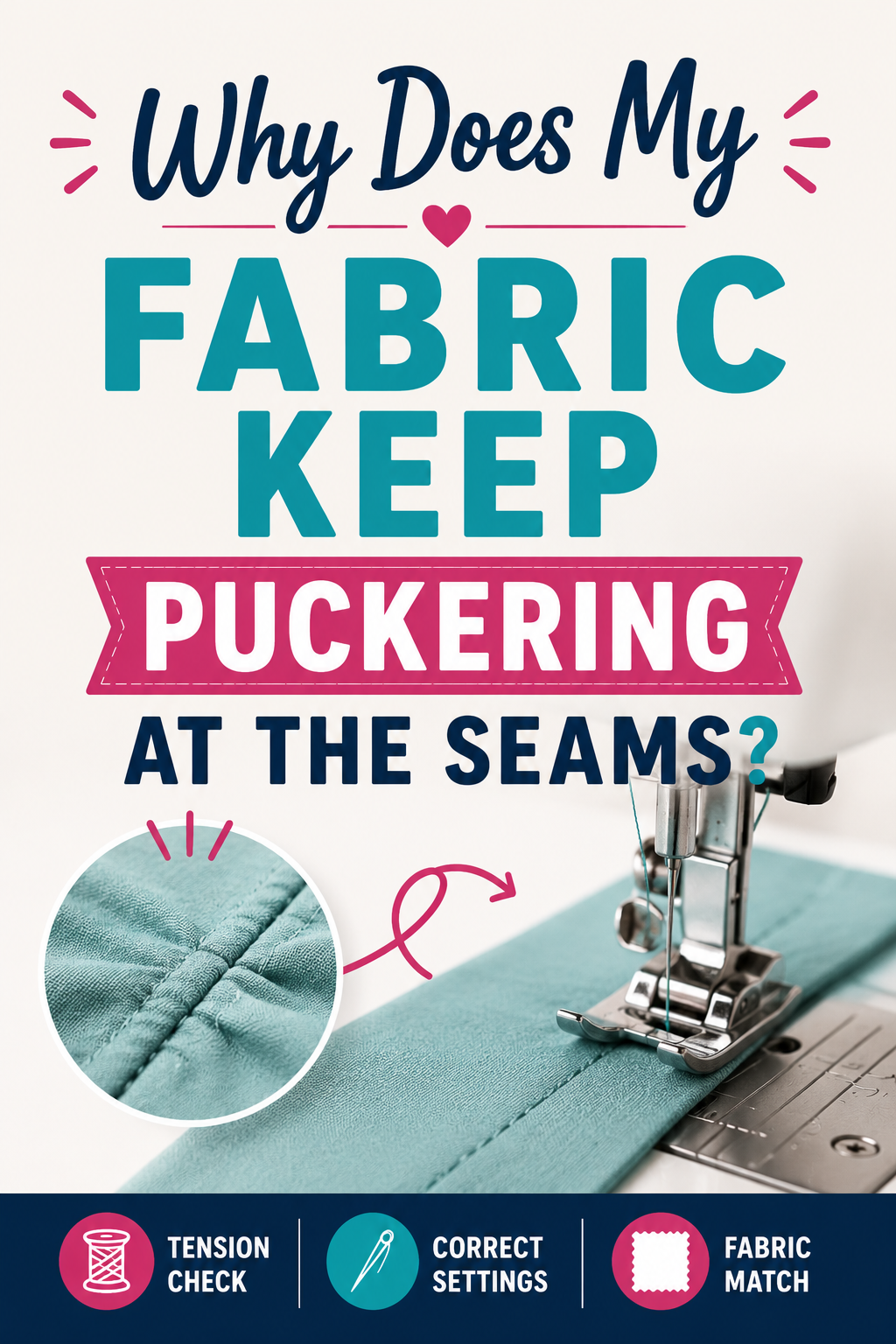
Why Does My Fabric Keep Puckering at the Seams?
Puckered seams are almost always caused by something adjustable: incorrect threading, tension imbalance, a dull needle, stitch length that is too long for the fabric, or too little presser foot pressure. This guide covers all nine common causes and exactly what to check and adjust for each one.

Puckered seams are one of the most visible signs that something went wrong during sewing. Your seams should lie flat with even, balanced stitching on both sides of the fabric. Here are nine common causes of puckering and how to fix each one.
1. The Machine Is Not Threaded Correctly
Incorrect threading disrupts the balance between the upper thread and the bobbin thread, creating uneven tension that causes puckering. This is always worth checking first, even if you are an experienced sewist.
Unthread completely and start over. Make sure the take-up lever is at its highest position before threading. Follow your user manual exactly, passing through every guide in sequence, and leave a four-inch thread tail under the presser foot when finished.
2. The Thread Tension Is Off
Tension imbalance is the most common cause of puckered seams. If the loops on one side of the fabric are larger than the other, the tension needs adjusting.
Loops on the bottom side of the fabric: Upper tension is too tight. Turn the dial counterclockwise to loosen.
Loops on the top side of the fabric: Upper tension may be too loose, or the bobbin thread tension needs attention.
Make small adjustments and test on a scrap after each change. Use the same weight of thread in both the upper spool and the bobbin. Mismatched thread weights are a common cause of tension imbalance that often gets overlooked, especially on sewing/embroidery combo machines where the embroidery bobbin thread may still be loaded.
Avoid adjusting bobbin tension unless directed by a technician. If upper tension adjustments do not resolve the problem, a technician can recalibrate the bobbin tension.
3. The Needle Is Dull, Bent, or Damaged
A dull needle does not pierce the fabric cleanly. Instead of cutting through, it deflects the fabric fibers and creates small distortions at the stitch that cause visible puckering. You may also hear a popping sound as the dull needle forces through each stitch.
Replace the needle and test again. Change your needle at the start of every project to prevent this. Needles occasionally arrive from the manufacturer with small burrs or imperfections, so if a brand new needle is causing puckering, try a different one before troubleshooting anything else.
4. The Stitch Length Is Too Long for the Fabric
Lightweight and delicate fabrics like silk, organza, and chiffon cannot support long stitches without puckering. The fabric bunches between stitch points because there is not enough support from the thread.
Shorten the stitch length until the puckering stops. A length of 1.5 to 2.0 works well for most lightweight fabrics. Avoid zigzag stitches on fabrics that pucker easily, since the wider needle movement creates more distortion.
5. The Presser Foot Pressure Is Too Light
If the presser foot is not applying enough downward pressure, the fabric can shift or float slightly instead of feeding smoothly under the needle. This uneven movement causes puckering.
Increase the presser foot pressure and test on a scrap. Most machines have a dial or screw for this adjustment, usually at the top of the presser foot bar. For fabrics that are difficult to feed evenly — particularly lightweight or stretchy materials — a walking foot is an excellent tool for preventing puckering, since it feeds the top and bottom layers at the same rate.
6. The Bobbin Case Is Full of Lint
Lint buildup around the hook race restricts hook movement and interferes with stitch timing. When the hook cannot complete its rotation cleanly, the stitch does not form evenly and puckering follows.
Remove the bobbin and clean the bobbin case, hook race, and feed dog area with the brush that came with your machine. Clean after every few projects.
7. The Fabric Is Stretchy, Slippery, or Very Thin
Lightweight, sheer, or stretchy fabrics are inherently more prone to puckering because they distort easily under needle pressure and tension.
Several techniques help with these fabrics:
Use a stabilizer or lightweight interfacing underneath the fabric to give it more body
Use a straight-stitch needle plate to reduce the opening the fabric can shift into
Switch to a shorter stitch length
Sew slowly and hold the fabric taut without pulling it
For knit and stretch fabrics, using a stretch needle and a stretch or zigzag stitch prevents puckered seams that result from thread breaking when the seam is stretched.
8. You Are Pulling the Fabric While Sewing
Pulling the fabric toward you as you sew stretches it between stitches and causes puckering. The feed dogs and presser foot are designed to move the fabric at a consistent rate. Pulling interferes with that rate and creates distortion.
Let the machine feed the fabric. If you feel the need to guide it, hold it lightly with your fingertips without applying backward tension.
9. The Thread Quality Is Poor
 Pin It
Low-quality thread has inconsistent twist and thickness, which creates uneven tension throughout a seam. Even when everything else is set correctly, cheap thread can produce puckered, uneven stitches.
Switch to a quality thread brand. You can test thread quality by letting a length hang freely — good thread hangs smoothly, while poor thread looks fuzzy or curls. Avoid bulk thread packs, which are typically inconsistent in quality.
Related reading: 10 Easy Ways to Sew Faster (Without Sacrificing Quality)
AI Sewing Coach
Create a free account to chat with our AI Sewing Coach — trained to help with sewing techniques, troubleshooting, projects, fabric questions, and more!
Comments
Comments are screened by an AI moderator for spam and inappropriate content.
Sign in to join the conversation.
Loading comments…