March 22, 2026 · Sewing Society · 3 min read · Sewing Machine Help & Troubleshooting
Disclosure: As an Amazon Associate, we earn from qualifying purchases. Some links in this post may be affiliate links.
Why Does My Sewing Machine Stop Working Suddenly?
A sewing machine that stops suddenly almost always has one of a handful of fixable causes: a thread jam, an empty bobbin, a partially engaged bobbin winder, a loose power cord, an overheated motor, or a broken belt. This guide covers nine common causes and exactly what to check for each one.

A sewing machine that stops mid-seam is frustrating, but the cause is almost always something identifiable and fixable. Here are the most common reasons and what to do about each one.
1. Thread Has Snagged or Jammed
A knot or snag in the upper thread or bobbin thread can stop the machine instantly, especially if the bobbin thread gets jammed around the hook. The machine cannot complete a stitch and locks up.
Check the bobbin case for wrapped thread or lint blocking the hook race. Remove the bobbin, clear any debris, and clean the area thoroughly before reinserting. Thread is more likely to snag if it is thick, poor quality, or the bobbin was wound by hand with uneven tension. Use quality thread and a machine-wound bobbin whenever possible.
2. The Bobbin Thread Is Almost Empty
Most modern sewing machines stop automatically when the bobbin thread runs low to prevent you from sewing an incomplete seam without noticing. On computerized machines, a notification appears on the screen. On mechanical machines, you may just notice the machine stopping.
Wind a new bobbin and insert it before continuing.
3. The Bobbin Winder Is Partially Engaged
When the bobbin winder is engaged, the needle mechanism disengages so thread can wind onto the bobbin safely. If the bobbin winder is bumped and only partially engaged while you are sewing, the machine may stop or run unevenly.
This happens most often on older machines with a small inner wheel on the handwheel to engage the winder. The wheel can work itself slightly loose during sewing. Check that the bobbin winder is fully disengaged to the sewing position before continuing.
4. The Power Cord Is Loose
Vibration from the machine can gradually work the power cord loose, causing intermittent power loss. If the machine stops and starts unpredictably, or the light flickers or goes out, a loose cord is likely the cause.
Check both connection points: the outlet and the machine itself. Push both ends in firmly. Also confirm the outlet is working by testing it with another device.
5. The Motor Has Overheated
Home sewing machines have a thermal protection feature that automatically shuts the motor off when it gets too hot. Sewing at high speeds for extended periods without breaks is the usual cause.
Unplug the machine and let it rest for at least 30 to 60 minutes before using it again. If it starts normally after cooling, overheating was the cause. To prevent it from recurring, take regular breaks during long sewing sessions and avoid sustained high-speed sewing on thick or heavy fabrics.
6. The Belt Is Broken or Slipping
A broken or slipping drive belt will cause the machine to stop suddenly or lose power mid-seam. Belt breakage is uncommon on modern sewing machines but is more likely on older or vintage machines, particularly treadle machines that see heavy use.
You can check the belt by removing the main panel on the side or back of the machine. A broken belt will be visibly separated. A slipping belt may look intact but will not grip the pulleys firmly. Belt replacement is a straightforward repair for a sewing machine technician and is inexpensive on most models.
7. The Presser Foot Lever Is Raised
On some machines, lifting the presser foot mid-seam will cause the machine to stop. This is a safety feature on certain models. If you accidentally nudged the presser foot lever while sewing, lower it and try again.
8. A Thread Has Wrapped Around the Handwheel or Motor Pulley
A loose thread that escapes the normal thread path can wrap around the handwheel axle or motor pulley and stop the machine abruptly. This is less common but happens more often with specialty threads that fray or with loose thread ends left near the machine.
If the handwheel feels stiff or will not turn freely, check for wrapped thread around the axle and any external pulleys before forcing the machine. Use sewing tweezers to remove it carefully.
9. The Machine Needs a Professional Service
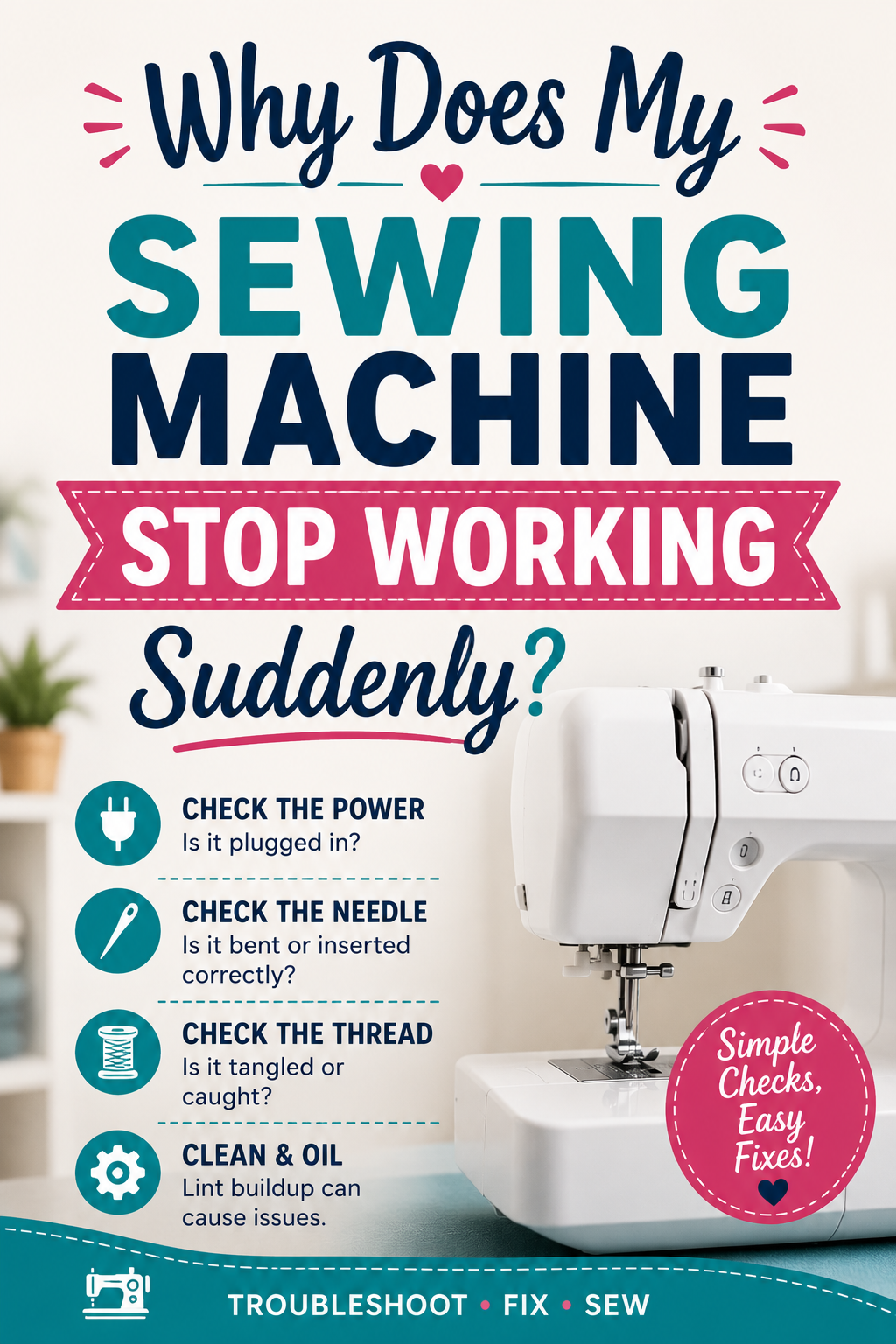 Pin It
If you have worked through all the above and the machine keeps stopping without an obvious cause, internal mechanical issues may be the cause. Worn gears, a failing motor, a damaged hook mechanism, or timing problems can all cause sudden stoppages and require a technician.
A professional tune-up every one to two years prevents many of these problems from developing. If your machine has not been serviced in several years and is stopping regularly, scheduling a service appointment is the most efficient path forward.
Related reading: Why Does My Sewing Machine Smell Funny?
AI Sewing Coach
Create a free account to chat with our AI Sewing Coach — trained to help with sewing techniques, troubleshooting, projects, fabric questions, and more!
Comments
Comments are screened by an AI moderator for spam and inappropriate content.
Sign in to join the conversation.
Loading comments…