March 18, 2026 · Sewing Society · 4 min read · Sewing Machine Help & Troubleshooting
Disclosure: As an Amazon Associate, we earn from qualifying purchases. Some links in this post may be affiliate links.
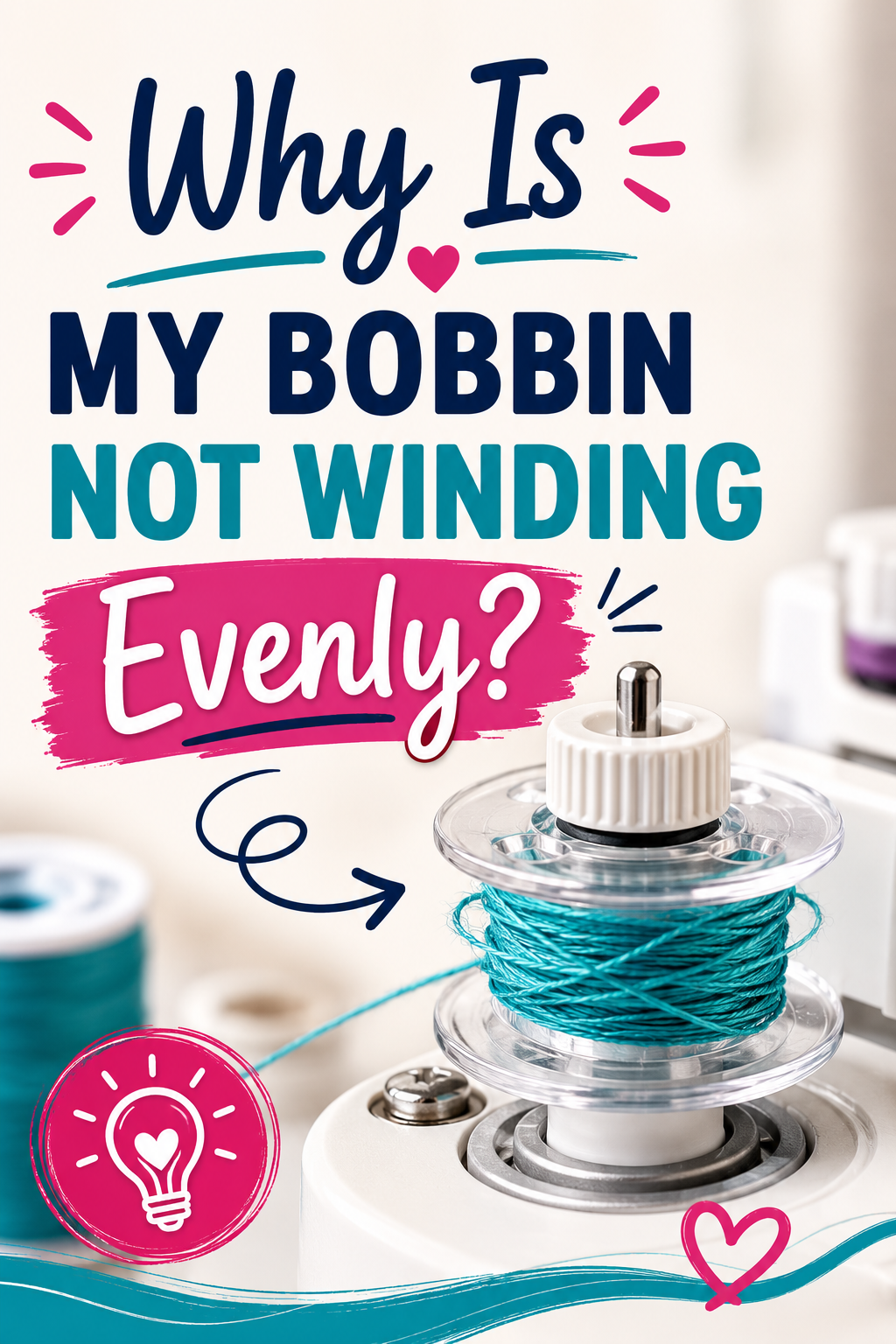
Why Is My Bobbin Not Winding Evenly?
Uneven bobbin winding causes tension problems and thread breakage every time you sew. The cause is usually something simple: an unsecured thread tail, thread wrapped around the winding pin, the thread not seated in the tension disc, or a worn rubber ring. This guide covers all nine common causes and exactly what to fix.

After winding, your bobbin thread should be tight, smooth, and distributed evenly from side to side. It should not be loose, lopsided, bulging in the middle, or so tight it stretches the thread. Uneven winding causes tension problems and thread breakage while sewing.
Here are nine common causes and how to fix each one.
1. You Are Not Securing the Thread Tail at the Start
If the thread tail is not secured before you begin winding, the first few rotations will be loose and uneven. Many bobbins have a small slit on the edge where you can anchor the thread end before winding. If yours does not, hold the tail firmly with your finger for the first several rotations until the thread wraps over itself enough to hold.
Once the thread is secured, trim the short starting tail close to the bobbin. A long dangling tail left on the finished bobbin can snag in the bobbin case or create confusion when inserting the bobbin.
2. Thread Is Wrapped Around the Bobbin Winding Pin
Thread can work its way around the bobbin winding pin without you noticing and interfere with even winding. This is a surprisingly common cause that gets overlooked because it is hidden inside the machine.
Use a flashlight to look closely around the base of the bobbin winding pin. If you see wrapped thread, use sewing tweezers to carefully remove it, pulling it out in one piece rather than cutting it. Cutting the thread risks leaving small pieces inside the machine. Once the pin is clear, try winding again.
3. The Thread Is Not Seated in the Tension Disc
The thread must pass through the bobbin winding tension disc before reaching the bobbin. This disc controls how tightly the thread wraps onto the bobbin and is the most important part of the winding setup. Skipping it or not seating the thread fully in the disc produces loose, uneven winding.
Follow your user manual for the exact thread path for your machine. Some sewists find that wrapping the thread around the disc twice creates more even, consistent results. Every machine is slightly different, so check your manual if standard threading is not working.
4. You Are Not Guiding the Thread as It Winds
On most machines, the thread guide moves up and down automatically to distribute thread evenly across the bobbin. On older machines, it does not.
If your machine does not have an automatic guide, use a fingertip or a pencil to gently guide the thread back and forth across the bobbin as it winds. Keep your fingers away from the moving gears. The goal is a smooth, layered bobbin with no gaps or piled-up sections.
5. The Bobbin Winder Is Not Fully Engaged
A bobbin winder that is only partially engaged will wind slowly, unevenly, or not at all. The thread will not have enough tension from the winding mechanism to lay flat.
Push the bobbin pin fully to the engaged position — most machines require you to slide it sideways until it clicks or locks. Some older machines require you to loosen a wheel on the handwheel to engage the winder. If it is even slightly off, the winding will be inconsistent.
6. You Are Using the Wrong Bobbin
Bobbins look nearly identical across brands, but size and shape vary between models. A bobbin that does not fit your specific machine will not sit correctly on the winding pin and will wind unevenly as a result.
Always use bobbins designed for your exact machine model. Check your user manual for the correct bobbin class. Using the right bobbin prevents winding problems and ensures the bobbin sits correctly in the bobbin case during sewing.
7. The Bobbin Is Defective or Warped
Even new bobbins can have defects. Metal bobbins occasionally have small burrs from manufacturing that snag the thread. Plastic bobbins can arrive warped or become warped from heat exposure, causing them to sit unevenly on the winding pin.
If a bobbin does not sit flat and stable on the winding pin, do not use it. Discard it and use a fresh one. Store plastic bobbins away from heat sources to prevent warping. Metal bobbins are more resistant to heat damage and are worth considering if warped plastic bobbins are a recurring issue.
8. The Rubber Ring on the Bobbin Winder Is Worn
There is a small rubber ring at the base of the bobbin winding pin or on the handwheel mechanism that provides friction to drive the winding. Over time this ring wears down, hardens, or cracks, reducing the grip needed to wind the bobbin evenly.
If your machine is several years old and the bobbin winder has become sluggish or produces loose, uneven bobbins, the rubber ring is a likely culprit. Replacement rings are inexpensive. A sewing machine technician can replace it quickly, or you can order the part and replace it yourself.
9. The Bobbin Winder Gears Are Damaged
 Pin It
If the internal gears of the bobbin winding mechanism are cracked or stripped, the winder will not function correctly regardless of what else you try. Gear damage is less common but does happen, particularly on machines that have been used heavily for many years.
This repair is more involved and can be costly depending on the machine. If your winder has failed completely and the cost of repair is high, a standalone bobbin winder is a practical and affordable alternative that works independently of your machine.
Related reading: How to Wind a Bobbin on Your Sewing Machine
AI Sewing Coach
Create a free account to chat with our AI Sewing Coach — trained to help with sewing techniques, troubleshooting, projects, fabric questions, and more!
Comments
Comments are screened by an AI moderator for spam and inappropriate content.
Sign in to join the conversation.
Loading comments…