December 16, 2025 · Sewing Society · 4 min read · Sewing Machine Help & Troubleshooting
Disclosure: As an Amazon Associate, we earn from qualifying purchases. Some links in this post may be affiliate links.
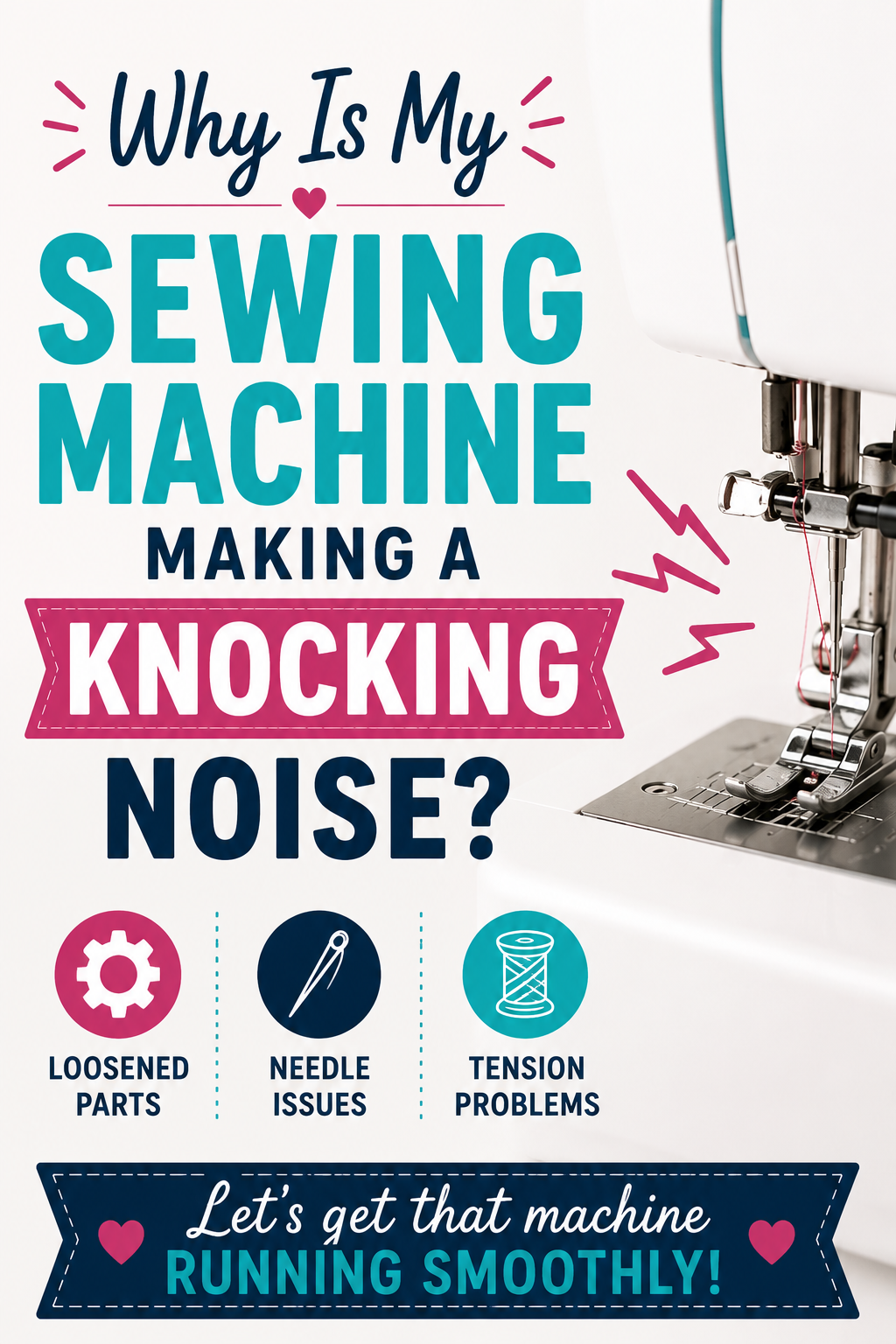
Why Is My Sewing Machine Making a Knocking Noise?
A knocking or clunking noise from your sewing machine means something is physically making contact that should not be. The most common causes are lint in the bobbin case, a partially engaged bobbin winder, a bent needle, a loose needle plate screw, the wrong bobbin, or hook timing that is off. This guide covers all seven causes and exactly what to check.

A sewing machine makes noise during normal operation, but a knocking or clunking sound is not normal. Stop sewing when you hear it. Continuing to run the machine can turn a minor issue into a costly repair. Here are seven common causes and what to do about each one.
1. The Bobbin Case Is Full of Lint
Heavy lint buildup in the bobbin case is one of the most common causes of a knocking noise. When lint accumulates around the hook race, the hook cannot move freely. As the needle descends and the hook attempts to form a stitch, the restricted movement creates a knocking or clicking sound.
Remove the bobbin and clean the bobbin case, hook race, and feed dog area thoroughly with the brush that came with your machine. Run the machine at low speed after cleaning to see if the noise stops. Clean your machine after every few projects to prevent this from recurring.
2. The Bobbin Winder Is Partially Engaged
When the bobbin winder is engaged, it disengages the needle mechanism so thread can wind onto the bobbin. If it is only partially engaged while you are sewing, the machine's internal timing is disrupted and a knocking or clunking noise is the result.
This is especially common on older machines that use a small inner wheel on the handwheel to engage the winder. That wheel can work itself slightly loose during sewing. Check that the bobbin winder is fully disengaged before continuing. If you hear the knocking sound stop when you push it fully to one side or the other, that was the cause.
3. The Moving Parts Need Oil
Metal parts that are dry or under-lubricated create friction and noise as they move against each other. A rhythmic knocking that increases with sewing speed often points to a lubrication issue.
Check your user manual to see if your machine requires manual oiling and where to apply it. Apply one to two drops of clear sewing machine oil at each oiling point. Do not use WD-40, car oil, or any general-purpose lubricant.
If your user manual does not include oiling instructions, do not oil the machine yourself. Many modern machines are factory-sealed and self-lubricating. Oiling them incorrectly can cause more problems than it solves. A thorough cleaning is often enough to quiet a noisy machine, or a technician can service it properly.
4. The Needle Is Bent, Damaged, or Dull
A bent needle strikes the throat plate, feed dogs, or bobbin case on each downstroke, producing a distinct knocking or tapping sound. The hit may be subtle at first, but it gets worse as the bend increases and will eventually snap the needle.
Replace the needle and test the machine. If the noise stops, the needle was the cause. Needles bend from sewing over pins, pushing through thick layers, or simply from extended use. Change the needle at the start of every project and keep a supply on hand.
5. The Needle Plate Screw Is Loose
The screw that holds the needle plate in place can vibrate loose during sewing, causing the plate to rattle and produce a knocking sound. On machines where the needle plate must be removed to access the bobbin, this screw is removed and replaced frequently and is especially prone to working loose.
Check the screw and tighten it by hand or with the screwdriver included with your machine. Do not overtighten. If the machine has multiple needle plate screws, check all of them.
6. You Are Using the Wrong Bobbin
Bobbins look nearly identical across brands, but small dimensional differences exist between models. A bobbin that is too small rattles and bounces in the bobbin case, creating a knocking or clunking noise on every rotation. A bobbin that is too large will not spin freely and can cause the hook to strike it.
Always use bobbins designed specifically for your machine model. Check your user manual for the correct bobbin class. If you are not sure which class your machine uses, a sewing machine dealer can help you find the right one.
7. The Hook Timing Is Off
Hook timing is the synchronization between the needle's downstroke and the rotation of the hook. The hook tip must pass behind the needle at the precise moment the needle begins to rise from its lowest point to catch the upper thread loop. If this timing is off, the needle can physically strike the hook on each pass, producing a rhythmic knocking sound.
 Pin It
You can do a basic check by slowly turning the handwheel toward you and watching through the needle plate opening. As the needle rises from its lowest point, the hook tip should be passing directly behind the needle at the level of the needle's eye. If the hook is early, late, or striking the needle visibly, the timing is off.
Hook timing adjustment is a mechanical repair that is best done by a technician. It is checked during every professional service appointment. Always turn the handwheel toward you only — turning it the wrong direction can knock the timing further out of alignment.
Related reading: Why Does My Sewing Machine Keep Skipping Stitches?
AI Sewing Coach
Create a free account to chat with our AI Sewing Coach — trained to help with sewing techniques, troubleshooting, projects, fabric questions, and more!
Comments
Comments are screened by an AI moderator for spam and inappropriate content.
Sign in to join the conversation.
Loading comments…