August 20, 2025 · Sewing Society · 2 min read · Fabric Guides
Disclosure: As an Amazon Associate, we earn from qualifying purchases. Some links in this post may be affiliate links.
Knit vs. Woven Fabric: Everything Beginners Need to Know
Knit or woven — does it really matter? Yes, and more than you might think! The fabric type you choose affects everything from how your garment fits to how easy it is to sew. Here's a simple, beginner-friendly breakdown of everything you need to know about the difference between knit and woven fabric.

Beginners need to know the difference between knit and woven fabric because the type of fabric you choose affects almost every part of a sewing project. Knit and woven fabrics stretch, drape, and behave differently, which means they require different sewing techniques, needles, stitches, and patterns. Using the wrong fabric can lead to problems like poor fit, puckered seams, stretched-out garments, or projects that simply don’t turn out as expected.
The terms "knit" and "woven" refer to the way a fabric is made, not the type of fiber it's made from. Cotton, for example, can be made into both knit and woven fabric. Your sewing pattern will tell you which type to use, so always check before you go fabric shopping.
How to Tell Them Apart
Not sure whether the fabric in your hand is a knit or a woven? Here are two quick ways to tell:
Look at the construction. Woven fabric has interlocking threads that create a checkerboard-like grid. Knit fabric has a series of interlocking loops — similar to a hand-knitted sweater, just much finer.
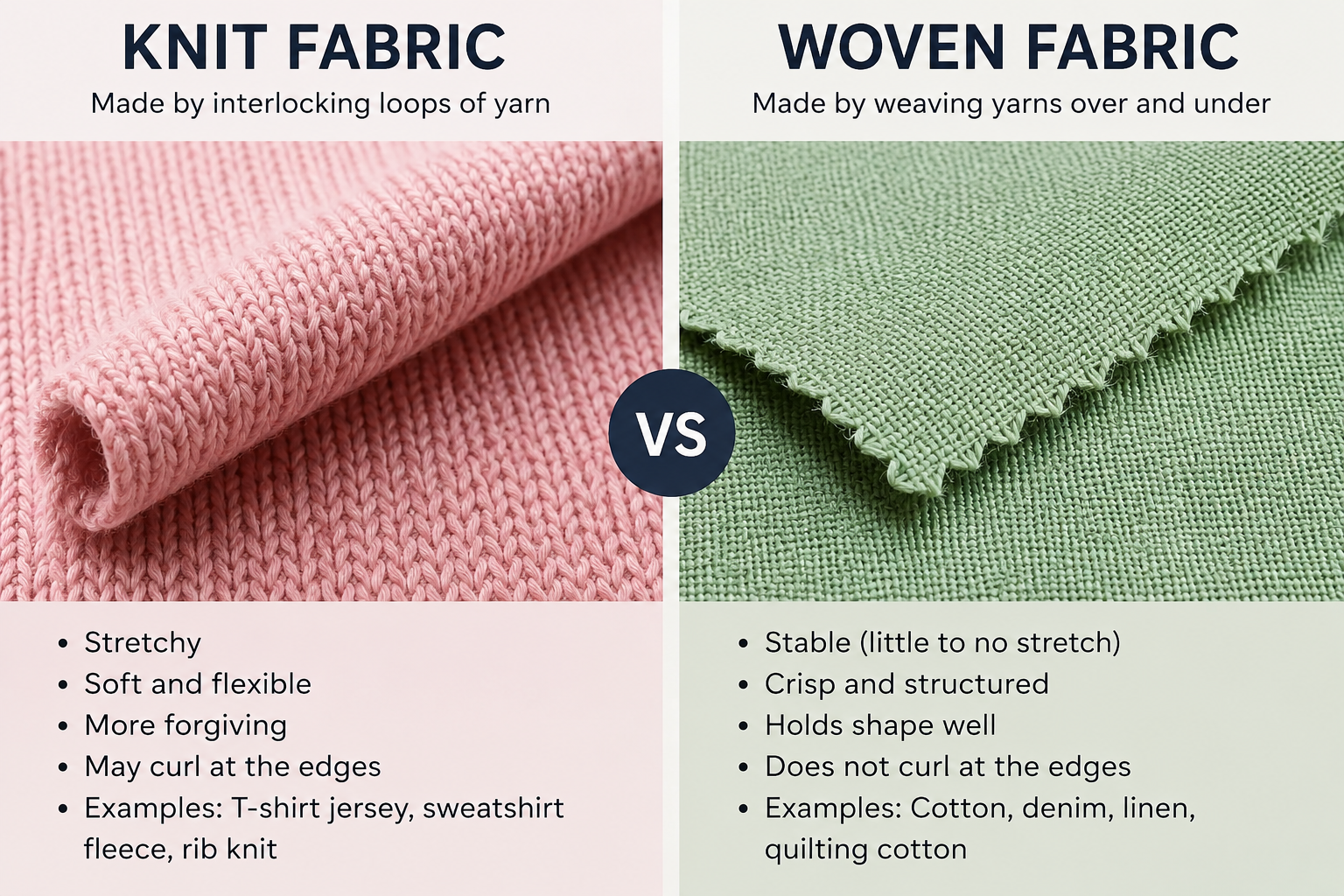
Give it a stretch. Knit fabric stretches easily in multiple directions. Woven fabric has very little stretch except on the diagonal (called the bias). If you pull the fabric horizontally and it stretches significantly, it's a knit.
Generally speaking, knit fabrics are used for t-shirts, leggings, and fitted tops, while woven fabrics are used for quilts, pants, bags, and structured garments.
Which Is Easier to Sew?
For beginners, woven fabric is generally easier to start with. It feeds through a sewing machine smoothly, stays stable as you handle it, and a straight stitch is all you need. Quilting cotton is a great first woven fabric. It's affordable, widely available, and very forgiving.
Knit fabric has a bit more of a learning curve. Because it stretches, it can shift and distort as you cut and sew. You'll also need stretch-appropriate stitches because a standard straight stitch will pop when the seam is pulled. A serger makes sewing knits much easier, but a zigzag or built-in stretch stitch on your regular machine works well too.
That said, once you get comfortable with knits, many sewists find them faster and more forgiving in terms of fit — the stretch does a lot of the work for you!
Common Knit and Woven Fabrics
Knit fabrics: Jersey, double-brushed poly (DBP), cotton lycra, rib knit, French terry, ponte, interlock
Woven fabrics: Quilting cotton, linen, denim, rayon challis, chiffon, muslin, canvas
Time to Go Fabric Shopping!
Always check your pattern's fabric recommendations before you shop. Using the right fabric type makes a bigger difference than most beginners expect. It affects how your garment fits, moves, and holds up over time.
Have questions about which fabric is right for your project? Drop them in the comments. I'm happy to help!
Related reading: How to Sew Viscose/Rayon: A Complete Fabric Guide
AI Sewing Coach
Create a free account to chat with our AI Sewing Coach — trained to help with sewing techniques, troubleshooting, projects, fabric questions, and more!
Comments
Comments are screened by an AI moderator for spam and inappropriate content.
Sign in to join the conversation.
Loading comments…